



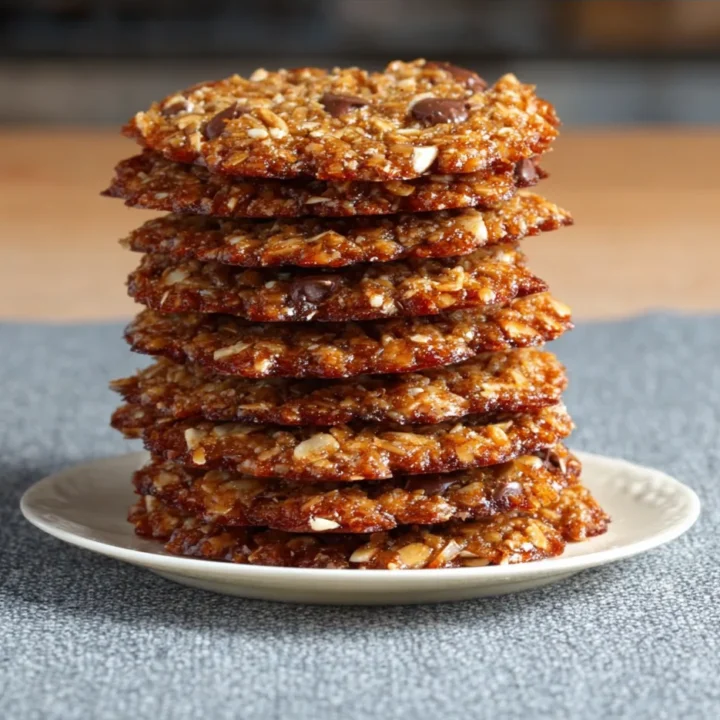
Florentine Cookies are one of those magical treats that feel both nostalgic and delightfully sophisticated. If you’ve ever bitten into a crispy lace cookie with caramelized edges and a whisper of chocolate, you know exactly why these delicate Italian gems have become a favorite on holiday dessert platters everywhere. But what I love most is how deceptively simple they are—just a handful of pantry staples transformed into a thin, golden cookie that tastes like a cross between almond brittle and a buttery toffee wafer.
Have you ever wanted a dessert that looks bakery-style impressive but takes surprisingly little effort? Florentines are exactly that kind of recipe. They’re fast, flexible, and perfect for gifting, pairing with coffee, or elevating any homemade cookie box. And even though they look intricate, the process is wonderfully approachable, even for beginner bakers.
Today, we’ll walk through how to make authentic almond Florentine cookies—those crisp, caramelized beauties sandwiched with smooth semisweet chocolate. Get ready for a treat that’s as fun to make as it is to share.
Why You’ll Love These Florentine Cookies
If you’re craving a cookie that’s crisp, delicate, and just a little bit irresistible, these homemade Florentine cookies are about to become a new favorite. They strike that perfect balance between elegance and ease—simple enough for a weeknight bake yet stunning enough to feature on a holiday platter. And the best part? Every bite delivers a mix of caramelized almonds, buttery sweetness, and a silky layer of semisweet chocolate that ties everything together.
Here’s what makes this recipe truly special:
- A Unique Texture: These crispy lace cookies bake into thin, golden wafers with beautifully uneven, lacy edges. They look fancy without requiring any special skill.
- Simple Ingredients, Big Flavor: A handful of basics—almonds, honey, brown sugar, butter—creates a caramel-like base with deep flavor and a satisfying chew.
- Quick Baking Time: Florentines bake fast, making them perfect for small batches or last-minute desserts.
- Versatile Pairings: Serve them with coffee, tea, or as part of a festive dessert board. They also make lovely edible gifts thanks to their gourmet charm.
- Beginner-Friendly: Despite their elegant appearance, the process is surprisingly forgiving. If you can stir, scoop, and bake, you can make authentic Italian-style Florentine cookies at home.
Whether you’re preparing a holiday treat or just indulging a sweet craving, these cookies offer a delightful mix of texture and flavor that stands out from traditional cookie recipes. They’re the kind of dessert that feels special with every single bite—just the way homemade treats should.
Ingredients You’ll Need
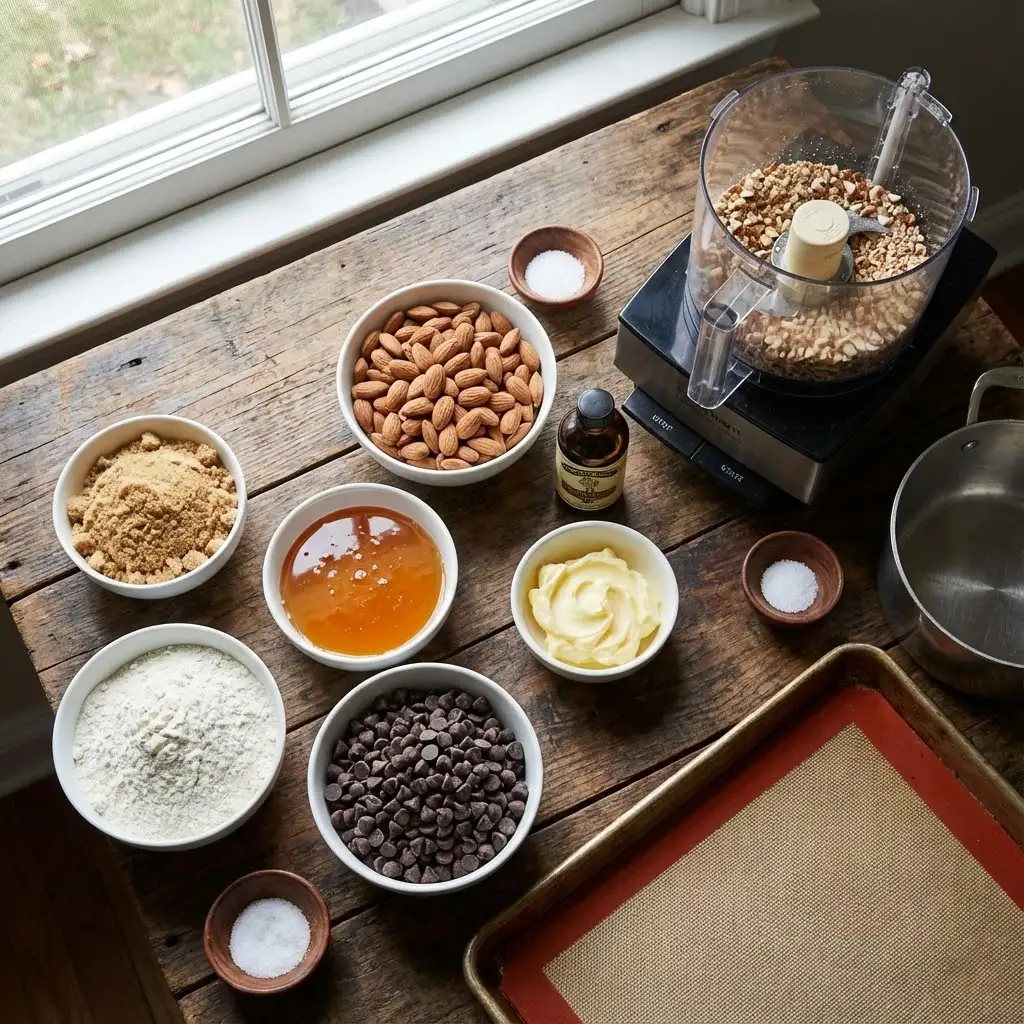
Before we dive into the baking process, let’s take a quick look at the simple, flavorful ingredients that give these almond Florentine cookies their signature crisp texture and caramelized sweetness. Even though the list is short, each item plays an important role — so a little attention to detail here goes a long way.
Dry & Nut Components
- 1 ½ cups whole raw almonds
These form the base of your lace cookies. Pulsing them into small, crumblike pieces adds texture without turning them pasty. - 3 tablespoons all-purpose flour
Just enough to bind the caramel mixture and help the cookies hold their delicate shape.
Wet & Caramel Ingredients
- ½ cup unsalted butter
Provides richness and helps melt the sugar into a smooth, glossy mixture. - ¾ cup light brown sugar
This is what gives Florentines their deep caramel flavor and gorgeous golden-brown color. - ¼ cup honey
Adds natural sweetness and contributes to that delightful chew in the center. - ½ teaspoon vanilla extract
Enhances the aroma and balances the caramel notes beautifully. - 1 pinch salt
Just a touch to round out the sweetness and highlight the nuttiness of the almonds.
Finishing Touch
- 1 cup semisweet chocolate chips, melted
For sandwiching or drizzling — this layer of rich chocolate makes the cookies feel truly luxurious.
How to Make Florentine Cookies (Step-by-Step Instructions)
Making crispy Florentine cookies is much easier than their elegant appearance suggests. Think of this process as a simple dance between gently caramelizing your ingredients and letting the oven work its magic. Follow these steps, and you’ll have beautifully thin, golden cookies with lacy edges and a smooth chocolate finish.
1. Prep Your Baking Setup
- Preheat your oven to 350°F (175°C).
- Line a baking sheet with a silicone baking mat (Silpat) — this ensures the cookies spread evenly and release cleanly once cooled.
- Set aside a clean counter or cooling surface where you can slide the mat once the cookies come out of the oven.
2. Chop the Almonds
- Add the whole raw almonds to a food processor.
- Pulse in short bursts, alternating with a few seconds of full-speed processing, until the nuts are finely chopped and crumbly.
- Tip: Stop before they become too fine; you want texture, not almond paste.
- No food processor? Chop by hand — it takes longer but works just as well.
3. Make the Caramel Mixture
- In a medium saucepan, combine unsalted butter, light brown sugar, and honey.
- Heat over medium, stirring occasionally until everything is melted and smooth.
- Bring the mixture to a gentle boil, then remove from heat.
- Immediately whisk in the vanilla extract, salt, and flour until the mixture is glossy and uniform.
4. Combine and Portion the Batter
- Fold the chopped almonds into the warm caramel mixture using a spatula.
- Drop small rounded spoonfuls (about 2 teaspoons or 15 grams each) onto the prepared baking mat.
- Space them well — these cookies spread a lot while baking.
- Lightly adjust the shapes if needed so they bake into neat, even circles.
5. Bake to Crispy Perfection
- Place the cookies in the center of the preheated oven.
- Bake for 10–12 minutes, rotating the pan halfway through.
- Look for golden brown centers and slightly darker, caramelized edges — that’s the signature Florentine lace cookie look.
- Once baked, slide the entire silicone mat off the tray and directly onto the counter to cool.
6. Cool and Release
- Let the cookies cool for 3–5 minutes, until crisp and firm.
- Gently peel each cookie off the mat.
- Repeat with remaining batches.
7. Add the Chocolate Layer
- Spread a thin layer of melted semisweet chocolate over the flat side of a cookie.
- Top with a second cookie, flat-side down, to create a sandwich.
- Press very gently so the chocolate spreads without squeezing out.
- Let them sit for about 30 minutes until the chocolate sets.
Pro Tips & Delicious Variations
Florentine cookies may look delicate, but once you understand their rhythm, they’re incredibly fun to customize. These tips will help you master the texture, prevent common issues, and explore creative twists that keep this classic treat exciting.
Pro Tips for Perfect Florentine Cookies
- Watch the oven closely.
These thin cookies can go from perfectly golden to too dark in a blink. Start checking at the 9-minute mark, especially if your oven runs hot. - Use a silicone mat, not parchment.
A Silpat promotes even spreading and makes it much easier to peel the cookies once cooled. - Keep your almond pieces consistent.
Finely chopped—but not powdered—almonds create the ideal lacy texture. Uneven chopping can cause irregular spreading. - Cool completely before handling.
Florentines firm up as they cool. If you try lifting them too early, they’ll tear or bend. - Space generously.
They spread a lot. Giving each scoop breathing room helps them bake into clean circles. - Use gentle pressure when sandwiching.
Pressing too hard can cause the cookies to crack or the chocolate to ooze out.
Variations to Try
- Dark Chocolate Florentines
Swap semisweet chocolate for dark chocolate to balance the sweetness with a deeper, richer finish. - Citrus Florentines
Add a teaspoon of finely grated orange zest to the caramel mixture for a bright, aromatic twist. - Mixed Nut Version
Replace half the almonds with chopped hazelnuts or pecans for a different nutty profile. - Chocolate Drizzle Only
Skip the sandwich step and lightly drizzle melted chocolate over the top for a lighter, single-layer cookie. - Espresso-Infused Florentines
Add ½ teaspoon instant espresso powder to the caramel mixture to create a café-style flavor pairing. - Gluten-Free Florentines
Use a gluten-free flour blend in place of all-purpose flour. The texture remains beautifully crisp.
Serving & Pairing Suggestions
Florentine cookies may be simple to make, but they have a way of elevating any moment — whether you’re hosting a cozy get-together or assembling a festive dessert spread. Their crisp, caramelized texture and touch of chocolate make them wonderfully versatile, and a little creativity goes a long way when it comes to presentation.
How to Serve Florentine Cookies
- As a standalone treat:
Their delicate, lacy crunch makes them perfect for enjoying all on their own. - On a dessert platter:
Pair them with shortbread, biscotti, or chocolate truffles to create a bakery-style assortment. - With fruit:
Fresh berries or citrus slices balance the sweetness and add a vibrant contrast. - As edible gifts:
Stack a few in a clear bag or small tin, tie with ribbon, and you have a gorgeous homemade present.
Perfect Pairings
- Coffee or espresso:
The caramelized edges and chocolate layer complement the richness of a bold brew. - Tea:
Earl Grey, chamomile, or a mild green tea pairs beautifully with the nuttiness of almond Florentines. - Hot chocolate:
For an indulgent twist, serve these cookies with a cozy mug of cocoa — especially during the holidays. - Ice cream:
Use a single Florentine as a crisp garnish or serve two alongside a scoop of vanilla, pistachio, or chocolate gelato.
Tools & Equipment Guide
Florentine cookies don’t require much equipment, but the right tools make all the difference in achieving those beautifully thin, evenly spread, crispy lace cookies. Here’s a simple guide to help you get the best texture, clean release, and consistent results every time.
Essential Tools
- Silicone Baking Mat (Silpat)
This is the unsung hero of perfect Florentines. It allows the cookies to spread smoothly and peel off easily once cooled. Parchment paper works in a pinch, but a silicone mat gives the most reliable results. - Baking Sheet
A sturdy, rimmed baking sheet ensures even heat distribution. Thinner pans may cause uneven browning. - Medium Saucepan
Used for melting the butter, sugar, and honey together into that glossy caramel base. - Food Processor
Ideal for pulsing almonds into fine, crumbly pieces without turning them into paste. If you don’t have one, a sharp knife and patience will do the job. - Heatproof Spatula
Perfect for stirring the caramel mixture and folding in the almonds. - Measuring Spoons & Cups
Precision matters here — especially for the flour and the small spoonfuls of batter. - Cooling Surface or Countertop
You’ll slide your silicone mat directly onto this after baking to help the cookies firm up quickly and evenly. - Small Offset Spreader or Spoon
Helpful for applying a smooth, even layer of semisweet chocolate when making cookie sandwiches.
Optional but Helpful
- Oven Thermometer
Florentines are sensitive to temperature. If your oven tends to run hot or cold, this helps ensure consistent results. - Digital Scale
Measuring the batter to about 15 grams per cookie helps you achieve uniform sizes — especially useful for sandwiching. - Cooling Rack
Not essential, but handy for airflow once the cookies are fully removed from the baking mat.
Troubleshooting Common Issues
Florentine cookies are wonderfully simple once you understand how they behave in the oven, but because they’re thin and delicate, a few small missteps can change the outcome. Here’s a helpful guide to the most common issues bakers run into — plus easy fixes to keep your almond Florentine cookies crisp, lacy, and picture-perfect.
My Florentine cookies spread too much.
- Your almond pieces may be too finely processed.
Fix: Pulse the nuts less — aim for small, crumbly bits, not almond flour. - The batter may be too warm.
Fix: Let it cool for 2–3 minutes before scooping. - Overmeasuring butter or undermeasuring flour can also cause excess spreading.
The cookies didn’t spread enough.
- The almond pieces may be too large.
Fix: Pulse them a bit more to encourage even spreading. - Oven temperature might be slightly low.
Fix: Verify with an oven thermometer and adjust as needed.
My Florentines turned too dark.
- These crispy lace cookies brown fast due to the caramel base.
Fix: Reduce baking time slightly or move the rack one notch higher. - Your oven may be running hot.
Fix: Adjust temperature down by 10–15 degrees.
The cookies won’t release from the baking surface.
- This usually happens when they’re still too warm.
Fix: Give them another 1–2 minutes — they release cleanly once fully crisp. - Parchment paper can sometimes cause sticking.
Fix: A silicone baking mat (Silpat) offers the most reliable release.
My chocolate coating isn’t setting.
- The kitchen might be warm or humid.
Fix: Place the cookies in the fridge for 10–15 minutes to help the chocolate firm up. - Use semisweet or dark chocolate; milk chocolate softens more quickly.
The cookies softened during storage.
- Moisture in the air can affect thin cookies.
Fix: Store Florentines in an airtight container with a small piece of parchment between layers. - For long-term crispiness, place a dry cracker or silica gel pack (food-safe) in the tin to absorb moisture.
FAQs About Florentine Cookies
Curious about making, storing, or customizing your Florentine cookies? Here are the most common questions bakers ask — answered simply and clearly to help you bake with confidence.
Florentine Cookies
If you’re craving a cookie that’s crisp, delicate, and just a little bit irresistible, these homemade Florentine cookies are about to become a new favorite.
Ingredients
For the Cookies:
- 1 ½ cups whole raw almonds
- ½ cup unsalted butter
- ¾ cup light brown sugar
- ¼ cup honey
- ½ teaspoon vanilla extract
- 1 pinch salt
- 3 tablespoons all-purpose flour
For the Chocolate Filling:
- 1 cup semisweet chocolate chips, melted
Instructions
1. Prep the Oven
- Preheat to 350°F (175°C) and line a baking sheet with a silicone baking mat.
2. Chop the Almonds
- Pulse almonds in a food processor until finely chopped but not powdered. Set aside.
3. Make the Caramel Base
- In a saucepan, melt butter, brown sugar, and honey over medium heat.
- Bring to a gentle boil, then remove from heat.
- Whisk in vanilla, salt, and flour until smooth.
4. Combine & Portion
- Fold in chopped almonds.
- Scoop rounded spoonfuls (about 2 teaspoons each) onto the prepared baking mat, leaving generous space for spreading.
5. Bake
- Bake for 10–12 minutes, rotating the baking sheet halfway through.
- Remove from the oven and slide the silicone mat onto the counter.
- Let cookies cool 3–5 minutes before lifting.
6. Add the Chocolate
- Spread melted chocolate on the flat side of one cookie.
- Top with another cookie, creating a sandwich.
- Allow chocolate to set for about 30 minutes.
Notes
- Use a silicone baking mat. Florentines spread widely and release best from a Silpat.
- Keep an eye on the color. These cookies brown quickly due to the caramel base — pull them once edges darken slightly.
- Uniform almond size matters. Too fine leads to overly thin, overly spread cookies; too coarse prevents spreading.
- Let them cool fully. They crisp up only after cooling; lifting too soon will cause tearing.
- Customize easily. Add orange zest, swap chocolate types, or mix nuts for creative variations.
Nutrition Information:
Yield: 24 Serving Size: 1Amount Per Serving: Calories: 160Total Fat: 10gSaturated Fat: 4gSodium: 35mgCarbohydrates: 16gFiber: 1gSugar: 12gProtein: 2g