



Have you ever needed a sauce that instantly transforms a simple dish into something rich, comforting, and unforgettable? That’s exactly what this homemade mustard sauce does. It’s creamy, tangy, and beautifully balanced — the kind of classic condiment you’ll want to drizzle on everything from roasted vegetables to your favorite grilled meats.
What I love most is how such simple ingredients — mustard powder, cream, vinegar, and a touch of sweetness — come together to create a silky, restaurant-style sauce right in your own kitchen. If you’ve ever wondered how to make a mustard sauce that feels both nostalgic and elevated, you’re in the right place.
Whether you’re planning a cozy dinner, prepping a quick weeknight meal, or just want a versatile mustard-cream sauce to keep on hand, this recipe delivers reliability and flavor in every spoonful. Let’s dive into a sauce that’s as easy as it is impressive.
Key Benefits & Why You’ll Love This Mustard Sauce
There’s something special about a homemade mustard sauce that instantly elevates even the simplest meal. It’s creamy, tangy, and full of character — the kind of sauce you’ll find yourself reaching for more often than you expect. If you’re wondering whether this recipe is worth adding to your rotation, here’s why it absolutely is:
✔ Rich, Silky Texture
Thanks to the combination of cream and a gently heated double-boiler method, this sauce turns beautifully smooth without the risk of scorching.
✔ Simple Ingredients, Big Flavor
You only need pantry basics — mustard powder, vinegar, sugar, and an egg yolk — yet the final result tastes like something you’d get in a cozy bistro.
✔ Versatile & Reliable
Whether you’re serving grilled chicken, roasted potatoes, steamed veggies, or even holiday ham, this tangy mustard sauce fits right in. It also reheats well, making it perfect for meal prepping or entertaining.
✔ Beginner-Friendly Technique
If you’ve ever been intimidated by sauces, this recipe helps you master essential skills like thickening, whisking, and light emulsification in a very approachable way.
✔ Balanced Flavor Every Time
Not too sharp, not too sweet — this sauce strikes a smooth harmony that’s crowd-pleasing and incredibly adaptable.
By the time you try it, you’ll see why this easy mustard sauce has become a staple for many home cooks. Once you make it, you’ll wonder how you ever cooked without it.
Ingredients
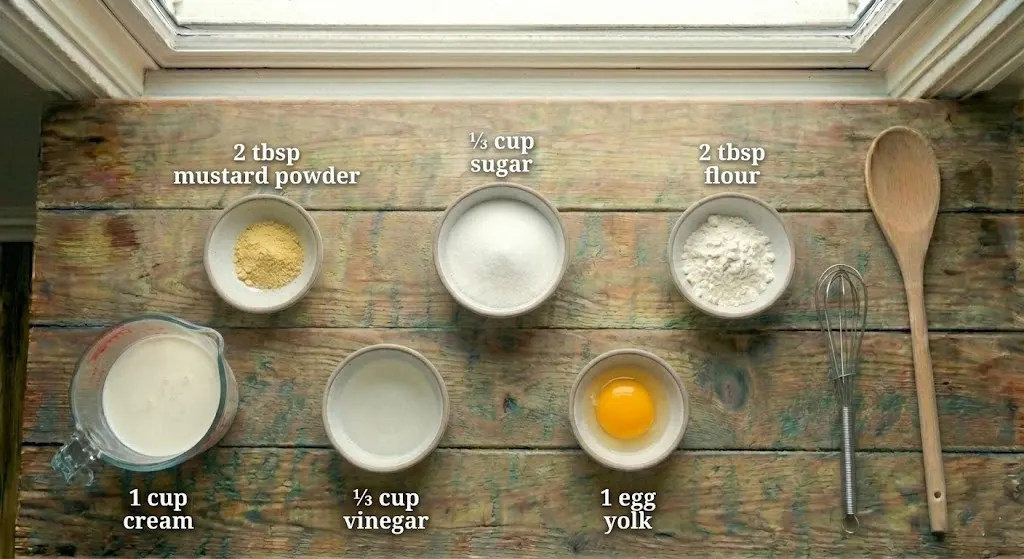
Before you start cooking, here’s everything you’ll need to make this rich and flavorful mustard-cream sauce. The ingredients are simple, but together they create a silky, tangy condiment that pairs beautifully with countless dishes.
What You’ll Need:
- 2 tablespoons mustard powder – the backbone of the sauce, giving it that classic sharp, savory depth.
- ⅓ cup white sugar – adds balance and softens the acidity.
- 2 tablespoons all-purpose flour – helps thicken the sauce to a smooth, velvety consistency.
- 1 cup cream – brings richness and body.
- ⅓ cup vinegar – provides the bright, tangy kick that makes mustard sauce irresistible.
- 1 egg yolk – binds everything together and adds a silky finish.
Feel free to gather everything ahead of time — it makes the cooking process easier and ensures the sauce comes together seamlessly.
Instructions
Making this homemade mustard sauce is simpler than it looks, and with a little patience, you’ll end up with a smooth, flavorful sauce that feels restaurant-worthy. Follow these steps, and I’ll walk you through it just like I would a friend in the kitchen:
Step-by-Step Directions
- Start with the dry ingredients
In the top of a double boiler or a heatproof metal bowl, whisk together the mustard powder, white sugar, and flour.
Tip: Mixing these first helps prevent clumps later. - Slowly add the cream
Gradually pour in the cream while whisking continuously.
Your goal here is to create a smooth, lump-free mixture. Take your time — the effort pays off. - Cook over gentle heat
Place the bowl over a pot of simmering water.
Cook the mixture for about 15 minutes, stirring occasionally, until it thickens into a silky, spoon-coating consistency.
Low, steady heat is key to preventing curdling. - Prepare the egg yolk mixture
In a small cup, add the vinegar and drop in the egg yolk.
Beat lightly with a fork until fully blended. - Combine and emulsify
Quickly stir the vinegar–egg mixture into the hot mustard base.
It should blend smoothly and give the sauce a glossy finish. - Keep warm until serving
Let the sauce rest over the simmering water until you’re ready to serve.
If it cools or thickens too much, simply reheat gently over the double boiler — it will return to its silky texture.
Take a moment to taste your sauce before serving. You’ll notice the perfect balance of creamy richness and zesty brightness — exactly what a great tangy mustard sauce should deliver.
Pro Tips & Variations
A great sauce becomes unforgettable when you understand the little tweaks that elevate it. Here are some helpful insights and creative twists to make your mustard sauce even more versatile and personalized to your taste:
Pro Tips for the Best Texture & Flavor
- Add the cream slowly
Pouring it in gradually prevents lumps and helps the mixture stay velvety smooth. - Keep the heat gentle
Using a double boiler avoids scorching and gives you better control over thickening. - Whisk continuously after adding the egg yolk
This ensures the sauce emulsifies properly and stays glossy instead of grainy. - Adjust acidity to taste
If you prefer a sharper sauce, add a splash more vinegar at the end. For a milder flavor, reduce it slightly. - Taste as you go
A small pinch of salt or a hint of extra sugar can bring the flavors into perfect balance.
Delicious Variations to Try
- Dijon Mustard Twist
Swap half the mustard powder for Dijon mustard for a French-inspired, slightly more mellow flavor. - Honey Mustard Sauce
Add 1–2 teaspoons of honey for a sweet, tangy version that pairs beautifully with chicken and roasted veggies. - Creole Mustard Style
Mix in a spoonful of Creole mustard for a bolder, spicier profile with Southern flair. - Herb-Infused Mustard Sauce
Stir in fresh dill, parsley, or thyme for a fragrant sauce that works wonderfully with fish and vegetables. - Lightened-Up Version
Use half cream and half milk for a slightly lighter texture without losing the creamy feel.
Serving & Pairing Suggestions
One of the best things about this creamy mustard sauce is how effortlessly it pairs with so many dishes. Its balance of tangy, rich, and slightly sweet flavors makes it a versatile companion in everyday meals and special occasions. Here’s how to enjoy it at its best:
Savory Pairings
- Grilled or roasted chicken
The sauce adds brightness and depth without overpowering the meat. - Pork chops or baked ham
Mustard and pork are a classic match — the acidity cuts through the richness beautifully. - Steak or beef tenderloin
A spoonful on the side gives each bite a creamy, tangy lift.
Vegetable Pairings
- Steamed broccoli or green beans
A drizzle of mustard sauce transforms simple veggies into restaurant-worthy sides. - Roasted potatoes or carrots
The creamy tang enhances their natural sweetness. - Asparagus
Especially delicious when served warm over grilled or roasted spears.
Seafood Pairings
- Baked or pan-seared salmon
The sauce adds a sophisticated touch with just the right amount of zing. - White fish
Think cod, halibut, or tilapia — the sauce complements their mild flavor perfectly.
Everyday Ways to Use It
- Spread it on sandwiches or wraps
- Serve as a dip for chicken tenders or roasted veggies
- Drizzle over grain bowls for added richness
- Swirl into mashed potatoes for a tangy twist
Tools & Equipment Guide
You don’t need fancy equipment to make a silky, flavorful mustard sauce, but having the right tools on hand makes the process smoother and more enjoyable. Here’s a simple guide to help you get set up before you start cooking:
Essential Tools
- Double Boiler or Heatproof Bowl + Pot
This is the key to preventing your sauce from burning. The gentle, indirect heat keeps it smooth and creamy without the risk of scorching. - Whisk
A small or medium whisk is perfect for blending the dry ingredients, incorporating the cream, and emulsifying the egg mixture. - Measuring Cups & Spoons
Accurate measurements ensure the right balance of tang, sweetness, and thickness. - Silicone Spatula
Great for stirring and scraping down the sides of the bowl so nothing sticks or clumps.
Helpful Extras (Optional but Useful)
- Fine-Mesh Sieve
If you want an ultra-smooth finish, you can strain the sauce before serving. - Heat-Resistant Cup or Small Bowl
Handy for mixing the vinegar and egg yolk before adding it to the hot base. - Thermometer (optional for beginners)
Not required, but helpful if you’re nervous about overheating the egg yolk. Keep the sauce under 180°F (82°C).
Troubleshooting Common Issues
Even with a simple recipe like this homemade mustard sauce, a few small hiccups can happen — especially when working with cream and an egg yolk. Here’s a helpful guide to fix (and prevent) the most common issues so your sauce turns out smooth and silky every time.
The Sauce Is Lumpy
- Why it happens: Cream was added too quickly, or the heat was too high.
- How to fix it:
- Remove from heat and whisk vigorously.
- If lumps persist, strain the sauce through a fine-mesh sieve for a perfectly smooth finish.
- How to prevent it: Add the cream slowly while whisking continuously.
The Sauce Curdled After Adding the Egg Yolk
- Why it happens: The mixture was too hot when the yolk went in.
- How to fix it:
- Whisk immediately and continuously — small curdles often smooth out with fast whisking.
- For severe curdling, blend with a handheld mixer to salvage the texture.
- How to prevent it: Let the mustard mixture cool for 30–60 seconds before adding the vinegar–yolk mixture.
The Sauce Is Too Thick
- Why it happens: Overcooking or too much flour.
- How to fix it:
- Add a splash of warm cream or warm water and whisk until it loosens to your desired consistency.
- How to prevent it: Cook over gentle heat and stir occasionally to monitor thickening.
The Sauce Is Too Thin
- Why it happens: Undercooking or not enough flour.
- How to fix it:
- Keep the sauce over the double boiler for a few more minutes, stirring until it thickens.
- How to prevent it: Make sure the mixture reaches a light simmer and cooks the full 12–15 minutes before adding the egg.
Sauce Tastes Too Sharp
- Why it happens: Vinegar intensity varies by brand or personal taste.
- How to fix it:
- Add ½–1 teaspoon of sugar or a splash more cream to soften the acidity.
- How to prevent it: Start with the listed amount of vinegar and adjust at the end.
FAQs
Here are some of the most common questions people ask when making a mustard sauce, along with clear, helpful answers to guide you toward perfect results every time.
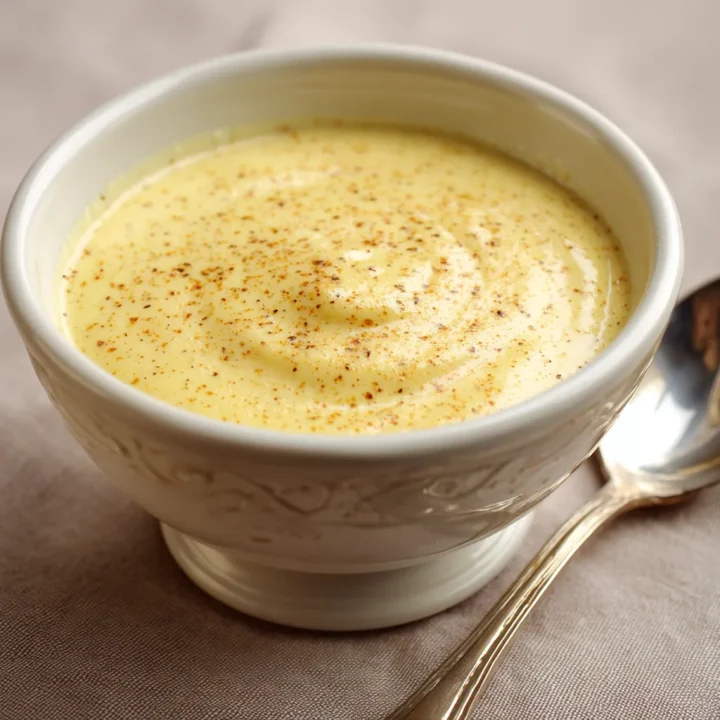
Mustard Sauce Recipe
There’s something special about a homemade mustard sauce that instantly elevates even the simplest meal. It’s creamy, tangy, and full of character — the kind of sauce you’ll find yourself reaching for more often than you expect.
Ingredients
- 2 tablespoons mustard powder
- ⅓ cup white sugar
- 2 tablespoons all-purpose flour
- 1 cup cream
- ⅓ cup vinegar
- 1 egg yolk
Instructions
Combine Dry Ingredients:
- Whisk together mustard powder, sugar, and flour in the top of a double boiler or heatproof metal bowl.
Add Cream Slowly:
- Gradually pour in the cream, whisking continuously to avoid lumps.
Cook Gently:
- Place the bowl over simmering water and cook for about 15 minutes, stirring occasionally, until the sauce thickens.
Prepare Egg Mixture:
- In a small cup, combine the vinegar and egg yolk. Beat lightly with a fork until smooth.
Incorporate & Emulsify:
- Stir the vinegar–egg mixture into the thickened mustard base. Mix until fully blended and glossy.
Keep Warm & Serve:
- Leave the sauce over gentle heat until ready to use. Rewarm over simmering water if needed.
Notes
- Avoid high heat: It can curdle the egg or separate the sauce.
- Strain for extra smoothness: If you notice any lumps, pass the sauce through a fine sieve.
- Adjust to taste:
- Add a splash more vinegar for extra tang.
- Add a bit more sugar for a milder, sweeter finish.
- Reheating tip: Always warm gently over a double boiler—not directly over flame.
- Texture too thick? Whisk in a spoonful of warm cream.
- Too thin? Let it cook a bit longer over low heat until it thickens.
Nutrition Information:
Yield: 6 Serving Size: 1Amount Per Serving: Calories: 120Total Fat: 7gSaturated Fat: 4gCholesterol: 30mgSodium: 20mgCarbohydrates: 13gFiber: 0gSugar: 12gProtein: 1g