




Have you ever bitten into a cookie so buttery and tender that it practically melts the moment it touches your tongue? That’s the magic of a classic shortbread cookies recipe—simple ingredients, irresistible texture, and a flavor that somehow feels both nostalgic and luxurious.
What I love most about shortbread is how such a humble mix of butter, sugar, and flour can create something so elegant. Whether you’re baking a batch for holiday gifting, pairing them with a warm cup of tea, or simply craving a melt-in-your-mouth treat, these cookies always deliver. They’re wonderfully forgiving, too—perfect for beginners, yet deeply satisfying for seasoned bakers who appreciate the beauty of a well-balanced, buttery crumb.
Today, I’ll walk you through a recipe that’s incredibly easy, endlessly versatile, and consistently delicious. If you’ve been searching for the ideal homemade shortbread—the kind with lightly golden edges and a soft, crumbly texture—you’re about to find your go-to version. Let’s dive in and bring this timeless bake to life.
Why You’ll Love This Shortbread Cookies Recipe
There’s something incredibly comforting about a cookie that’s simple, reliable, and effortlessly delicious—and that’s exactly what these buttery shortbread cookies deliver. If you’re looking for a melt-in-your-mouth treat that feels both classic and cozy, this recipe will quickly become a favorite in your baking rotation.
Here’s what makes it special:
- Unforgettable texture: Thanks to a rich dose of softened butter, these cookies bake up tender, crumbly, and perfectly “short”—that signature sandy bite every great shortbread should have.
- Just a handful of ingredients: With flour, sugar, vanilla, and butter, you can create a full batch of cookies without any complicated steps or specialty items.
- Perfectly versatile: Whether you want a simple everyday snack, a holiday platter addition, or a base for fun flavor variations, this dough adapts beautifully.
- Beginner-friendly process: If you’re new to baking, this recipe is wonderfully forgiving. If you’re experienced, you’ll appreciate how consistent and customizable it is.
And because shortbread pairs so well with warm drinks, these cookies are ideal for serving with tea, coffee, or hot chocolate—making them a year-round go-to. With their golden edges, rich aroma, and classic flavor, you’ll find yourself reaching for this easy shortbread cookie recipe again and again.
Ingredients You’ll Need
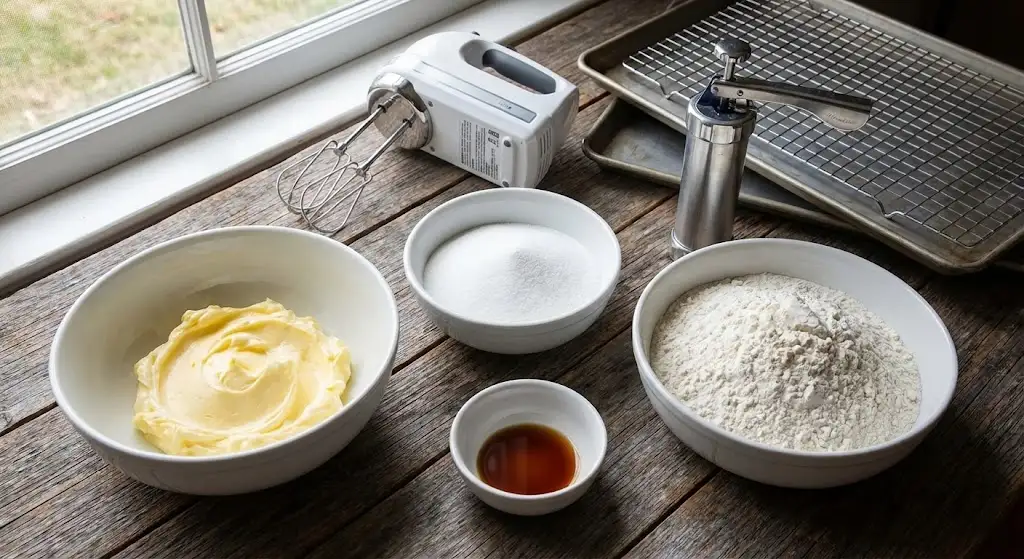
Shortbread is all about simplicity, and this ingredient list proves it. With just four staples, you’ll create a dough that’s rich, smooth, and perfect for shaping. Here’s what you’ll need and why each ingredient matters:
- 2 cups butter, softened
The star of the recipe. Softened butter gives shortbread its signature buttery flavor and melt-in-your-mouth texture. Make sure it’s softened—not melted—for the best results. - 1 cup white sugar
This adds sweetness while helping create that delicate, crumbly structure. Granulated sugar works best here. - 2 teaspoons vanilla extract
Vanilla enhances the cookie’s aroma and flavor, adding warmth and depth to each bite. - 4 cups all-purpose flour
Flour provides structure. With shortbread, this higher ratio of flour to butter creates the classic “short” and tender crumb.
How to Make These Shortbread Cookies
Making shortbread is wonderfully straightforward, and the process feels almost therapeutic. Follow these steps, and you’ll have beautifully tender cookies with lightly golden edges and that irresistible buttery crumb.
- Prepare Your Ingredients
Start by gathering everything you need. Using softened butter is key—it blends smoothly and creates that classic melt-in-your-mouth texture. - Preheat the Oven
Set your oven to 350°F (180°C). Shortbread bakes low and slow, allowing the cookies to stay pale with just a hint of golden color around the edges. - Cream the Butter and Sugar
In a large bowl, beat the softened butter and sugar together on medium speed for 3–4 minutes. You’re looking for a light, fluffy mixture—this step adds air and helps the cookies hold their shape while still staying tender. - Add the Vanilla
Mix in the vanilla extract until fully combined. It adds warmth and rounds out that classic shortbread flavor. - Incorporate the Flour
Add the flour gradually, mixing on low speed. The dough will look crumbly at first, but keep going—it will come together into a smooth, pliable shortbread dough. Avoid overmixing to maintain that delicate texture. - Shape the Cookies
Load the dough into a cookie press and press cookies directly onto ungreased cookie sheets. Leave about 1½ inches between each cookie—they don’t spread much, but that space helps them bake evenly. - Bake to Perfection
Bake for 10–12 minutes, or until the edges just start turning golden. The centers will stay pale—that’s exactly what you want for classic shortbread. - Cool Completely
Place the cookie sheets on a wire rack to cool for a few minutes, then transfer the cookies directly onto the rack to cool fully. This step firms up the texture and gives you that perfect crumbly bite.
Pro Tips & Variations
Shortbread may be simple, but a few smart techniques can take your cookies from good to unforgettable. Here are some helpful tips—along with fun variations—to help you customize your shortbread cookies recipe to your taste.
Pro Tips for Perfect Shortbread
- Use truly softened butter:
Butter should be soft enough to press with your finger but not melted. This ensures a smooth dough and that classic tender, crumbly texture. - Don’t rush the creaming step:
Beating the butter and sugar for a full 3–4 minutes adds air into the dough, helping the cookies stay light instead of dense. - Add flour gradually:
This prevents overmixing and helps the dough come together evenly without becoming tough. - Skip greasing your cookie sheets:
Shortbread has enough butter to release on its own. Greasing the pan can cause spreading. - Watch the color closely:
Shortbread should stay pale—only the very edges should turn lightly golden. This preserves that melt-in-your-mouth bite.
Easy Flavor Variations
Shortbread is wonderfully versatile. Try these simple twists to make the recipe your own:
- Lemon Shortbread:
Add 1 tablespoon of fresh lemon zest and switch the vanilla for lemon extract. - Chocolate-Dipped Shortbread:
After cooling, dip half of each cookie in melted chocolate and let it set. - Almond Shortbread:
Replace vanilla with almond extract for a fragrant, nutty aroma. - Holiday Spice:
Add a pinch of cinnamon or nutmeg for a warm seasonal twist. - Sprinkle Shortbread:
Fold in colorful sprinkles for a fun, kid-friendly variation.
Serving & Pairing Suggestions
Shortbread cookies are delightfully simple on their own, but the right pairing can turn them into an even more memorable treat. Their buttery, melt-in-your-mouth texture makes them the perfect companion for both everyday moments and special occasions.
Here are some delicious ways to enjoy them:
- With a warm drink:
Pair your cookies with tea, coffee, or hot chocolate. Their rich, crumbly texture balances beautifully with anything warm and cozy. - As part of a dessert board:
Add them to a holiday cookie platter or serve alongside fruits, chocolates, and nuts for an elegant dessert spread. - Dipped or drizzled:
Elevate your shortbread by drizzling them with melted chocolate or caramel. This adds a touch of sweetness without overpowering that classic buttery flavor. - Alongside ice cream:
Crumble a cookie over vanilla or caramel ice cream for a simple but irresistible dessert. - Gift-ready:
Their long shelf life and sturdy structure make shortbread ideal for gifting. Package them in tins, boxes, or cello bags for a thoughtful homemade present.
Tools & Equipment Guide
One of the best things about making shortbread cookies is how little equipment you actually need. Still, using the right tools can make the process smoother and help you achieve that perfect crumbly texture and beautifully shaped cookies.
Here’s what I recommend having on hand:
- Electric mixer (hand or stand):
Essential for creaming the butter and sugar until light and fluffy. This step sets the foundation for tender, airy cookies. - Large mixing bowl:
Gives you plenty of space to blend the dough without making a mess. - Cookie press:
Ideal for shaping classic shortbread designs. It presses the dough into evenly sized cookies that bake consistently. - Cookie sheets:
Choose ungreased, light-colored baking sheets. Dark pans can cause the bottoms to brown too quickly. - Wire cooling rack:
Helps the cookies cool evenly and prevents the bottoms from becoming soggy. - Measuring cups and spoons:
Accuracy matters, especially with a simple recipe like shortbread where each ingredient plays an important role. - Spatula or dough scraper:
Useful for transferring cookies and scraping down the sides of the bowl while mixing.
Troubleshooting Common Issues
Shortbread cookies are simple to make, but like any classic recipe, a few small missteps can affect the final texture. If something doesn’t turn out quite right, don’t worry—I’ve gathered the most common issues along with clear, friendly fixes to help you get perfect results every time.
1. Dough Is Too Crumbly or Won’t Come Together
Shortbread dough naturally starts out crumbly, but it should eventually form a smooth, soft dough.
- Possible causes: Butter not soft enough, flour added too quickly, or under-mixing.
- Fix it: Keep mixing gently or use your hands to bring it together. A few extra kneads often solve it.
2. Cookies Spreading in the Oven
Shortbread should hold its shape, especially when pressed.
- Possible causes: Butter too warm or dough over-creamed.
- Fix it: Chill the shaped cookies on the baking sheet for 10–15 minutes before baking. This helps them stay crisp and defined.
3. Cookies Are Too Brown
Shortbread should stay pale with just slightly golden edges.
- Possible causes: Oven temperature too high or using dark-colored baking sheets.
- Fix it: Lower the rack to the middle position and use light metal cookie sheets to prevent over-browning.
4. Cookies Are Dry or Hard
Shortbread should be tender and crumbly—not tough.
- Possible causes: Overmixing once the flour is added or baking too long.
- Fix it: Mix only until the dough comes together and watch closely during the last minutes of baking.
5. Cookies Cracking While Pressing or Forming
The dough should be pliable enough for a cookie press.
- Possible causes: Dough is too cool or too dry.
- Fix it: Let the dough rest at room temperature for a few minutes or knead it gently until smooth.
6. Flavor Tastes Flat
Shortbread relies on simple ingredients—so small details matter.
- Possible causes: Old vanilla extract or low-quality butter.
- Fix it: Use real vanilla extract and good-quality butter for the richest, most aromatic cookies.
FAQs
Here are some of the most common questions bakers ask when making shortbread cookies—along with clear, helpful answers to guide you toward perfect results.
Shortbread Cookies Recipe
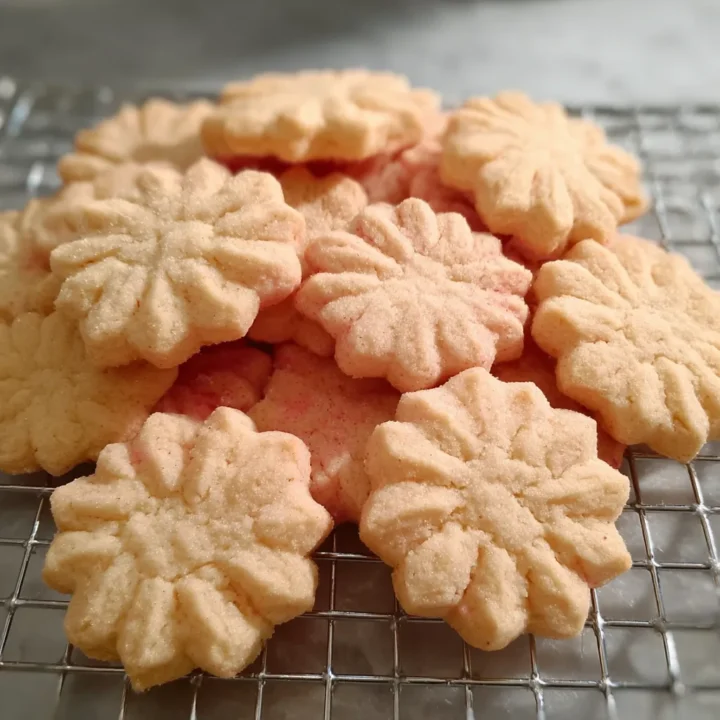
There’s something incredibly comforting about a cookie that’s simple, reliable, and effortlessly delicious—and that’s exactly what these buttery shortbread cookies deliver. If you’re looking for a melt-in-your-mouth treat that feels both classic and cozy, this recipe will quickly become a favorite in your baking rotation.
Ingredients
- 2 cups butter, softened
- 1 cup white sugar
- 2 teaspoons vanilla extract
- 4 cups all-purpose flour
Instructions
- Prepare Ingredients: Ensure butter is softened and ingredients are measured accurately.
- Preheat Oven: Set to 350°F (180°C).
- Cream Butter & Sugar: Beat together for 3–4 minutes until light and fluffy.
- Add Vanilla: Mix until fully incorporated.
- Add Flour Gradually: Stir in the flour a little at a time until a soft dough forms.
- Shape Cookies: Fill a cookie press with dough and press cookies onto ungreased baking sheets, leaving 1½ inches between each.
- Bake: Bake for 10–12 minutes, until edges are just turning golden.
- Cool: Let cookies rest on the baking sheet for a few minutes, then transfer to a wire rack to cool completely.
Notes
- Butter matters: Use high-quality butter for the best flavor and texture.
- Avoid overmixing: Once the flour is added, mix just until the dough comes together.
- Color is key: Shortbread should stay pale—remove it from the oven as soon as the edges lightly brown.
- Cookie press tip: If the dough is too firm to press, let it rest for a few minutes at room temperature to soften slightly.
- Make ahead: Dough can be refrigerated for up to 3 days or frozen for up to 3 months.
Nutrition Information:
Yield: 36 Serving Size: 1Amount Per Serving: Calories: 120Total Fat: 7gSaturated Fat: 4gCholesterol: 20mgSodium: 2mgCarbohydrates: 13gFiber: 0gSugar: 5gProtein: 1g