




If you’ve ever craved a cheesecake that feels indulgent but won’t slow you down, this light and creamy cottage cheese cheesecake is about to become your new go-to. It has all the silky richness you love in a classic baked cheesecake, but with a wholesome twist that leans on cottage cheese and Greek yogurt for a naturally high-protein, lighter dessert.
I love this recipe for days when I want something sweet without feeling weighed down. Everything comes together in a blender, so the filling turns unbelievably smooth, even if you’re using cottage cheese straight from the tub. And if you’ve ever wondered whether cottage cheese can really transform into a velvety cheesecake, the first bite answers that with a confident yes.
Whether you top it with fresh strawberries, a simple compote, or keep it plain and elegant, this cheesecake fits any mood you’re in. It’s easy, satisfying, and endlessly adaptable, making it perfect for busy weeknights, meal prep, or a cozy weekend bake. Ready to see how effortlessly this comes together? Let’s get into it.
Key Benefits and Why You’ll Love This Light & Creamy Cottage Cheese Cheesecake
If you’re someone who loves dessert but also appreciates a lighter, more nourishing option, this light and creamy cottage cheese cheesecake hits the sweet spot. It delivers that dreamy, silky texture you expect from a classic baked cheesecake, but with a fresher, high-protein twist that feels genuinely satisfying.
Here’s what makes it special:
- It’s lighter without sacrificing flavor.
Cottage cheese and Greek yogurt create a naturally creamy filling that tastes rich but won’t leave you feeling weighed down. It’s the kind of dessert you can enjoy any day of the week. - Everything blends into a perfectly smooth batter.
Even if you’re skeptical about cottage cheese in desserts, a quick blitz in the blender transforms it into a velvety, lump-free base that’s shockingly close to traditional cheesecake. - The recipe is flexible and forgiving.
Use any fat level of cottage cheese, choose between flour or cornstarch, and decide if you want a graham cracker crust or prefer a crustless, high-protein cheesecake. It adapts to your mood and pantry. - Ideal for small gatherings or personal-size treats.
This 6-inch cheesecake is perfect for intimate dinners, meal prep, or when you want a homemade dessert that doesn’t leave you with leftovers for days. - Naturally high in protein.
With cottage cheese, Greek yogurt, and egg in the mix, this recipe offers a more nutrient-forward alternative to classic cheesecake while still tasting indulgent. - Make-ahead friendly.
The cheesecake sets beautifully after chilling, making it an easy dessert to prep the night before.
Altogether, this recipe gives you the creamy, cozy experience of cheesecake with a lighter, modern twist that fits seamlessly into everyday cooking.
Ingredients
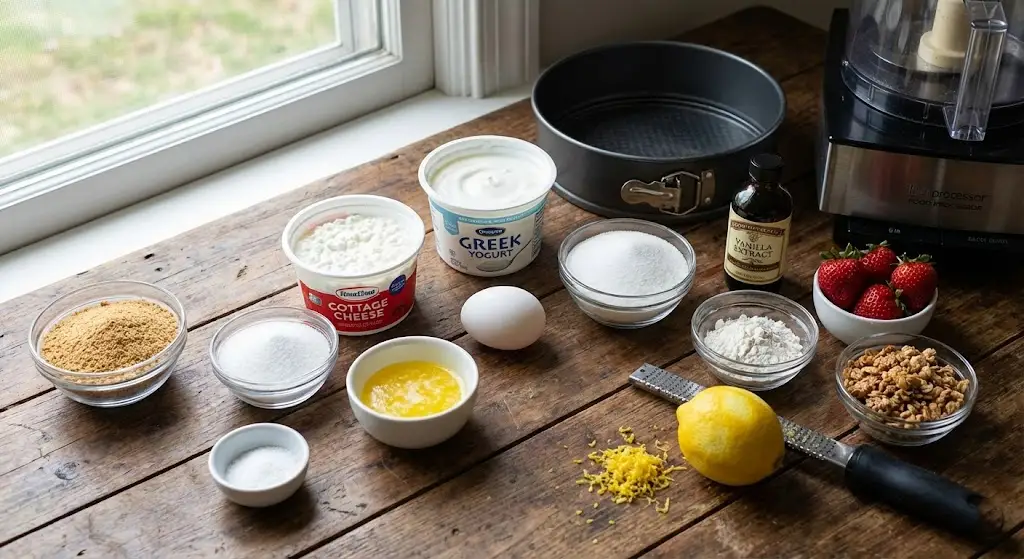
Before you dive in, here’s a quick look at everything you’ll need to make this light and creamy cottage cheese cheesecake. The ingredient list is intentionally simple, keeping the recipe approachable while still delivering that classic cheesecake experience.
Optional Graham Cracker Crust
If you love a little crunch and contrast, the crust adds a warm, toasty layer beneath the creamy filling.
- ¾ cup graham cracker crumbs
- 1 tablespoon sugar
- Pinch of kosher salt
- 3 tablespoons unsalted butter, melted
Cheesecake Filling
This is where the magic happens. Blending cottage cheese and Greek yogurt creates a silky texture that feels rich without being heavy.
- 1 cup (227 g / 8 oz) cottage cheese, any fat level
- ¼ cup (57 g / 2 oz) Greek yogurt (nonfat, 2 percent, or whole)
- 1 large egg
- 2 ½ tablespoons (32 g) sugar
- 1 ½ tablespoons (12 g) flour or cornstarch
- ½ teaspoon vanilla extract
- ½ teaspoon finely grated lemon zest
Optional Toppings
These little extras elevate the cheesecake and add color, texture, or a fresh pop of flavor.
- Fresh or cooked strawberries
- Granola
- Extra yogurt for serving
Feel free to mix and match toppings or keep it simple. Either way, the base is delicious on its own, and the ingredients come together effortlessly for a lighter, high-protein cheesecake you can enjoy anytime.
Instructions
This cheesecake comes together with a blend-and-bake simplicity that feels almost too easy. Think of this as your relaxed, step-by-step walkthrough to a smooth, creamy cottage cheese cheesecake that sets beautifully every time.
Make the Crust (Optional)
If you’re craving that classic graham cracker base, this quick crust adds a warm, buttery crunch.
- Preheat your oven to 350°F (175°C) and lightly grease a 6 inch springform pan.
(If you’re using an 8 to 9 inch pan, just double the recipe.) - In a small bowl, mix together the graham cracker crumbs, sugar, and a pinch of salt.
- Stir in the melted butter until every crumb is evenly coated and the mixture resembles wet sand.
- Press the mixture firmly into the bottom of your prepared pan. A flat-bottomed glass works great here.
- Bake for 10 to 12 minutes, until lightly golden and wonderfully fragrant. Let it cool while you prepare the filling.
Make the Cheesecake Filling
This is where the magic happens. A blender or food processor turns cottage cheese into a silky, lump-free base.
- Add the cottage cheese, Greek yogurt, egg, sugar, flour (or cornstarch), vanilla, and lemon zest to your blender or processor.
- Blend until the mixture is completely smooth and creamy, with no visible bits of cottage cheese.
(A good 30 to 60 seconds usually does the trick.) - Pour the filling over your baked crust, or directly into a greased pan if you’re going crustless.
- Bake for 30 to 35 minutes, until the edges are set and the center still has a soft, gentle jiggle.
(It should wobble slightly but not look runny.)
Cool and Serve
This step transforms your baked cheesecake into its silky, chilled perfection.
- Cool the cheesecake to room temperature, then refrigerate for at least 4 hours or ideally overnight.
- Top with a dollop of yogurt, a sprinkle of granola, or fresh strawberries.
If you want something cozier, simmer frozen strawberries with a splash of water, a touch of sugar, and a little cornstarch slurry until it thickens into a simple compote.
Pro Tips and Variations
Think of this section as your little shortcut to cheesecake success. These simple tweaks and insights help you get the most out of this light, high protein cottage cheese cheesecake, whether you’re after a creamier texture, a flavor twist, or a different serving style.
Pro Tips for the Best Texture
- Blend thoroughly for a silky finish.
Give the filling enough time in the blender to fully smooth out the cottage cheese. A well-blended batter is the secret to a cheesecake that tastes like the classic version. - Don’t skip the jiggle test.
The cheesecake is done when the edges are set but the center still has a gentle wobble. Pulling it out at this stage keeps the texture light and custardy. - Cool gradually to avoid cracks.
Let the cheesecake cool at room temperature before chilling. Sudden temperature changes can cause cracking, even with lighter recipes. - Chill long enough for the flavor to deepen.
Four hours is good, overnight is better. The filling firms up and the flavor rounds out beautifully.
Easy Variations to Try
- Go crustless for an ultra-light version.
Skip the graham cracker base for a simpler, lower calorie cheesecake that still tastes indulgent. - Add a lemon twist.
If you love bright flavors, increase the lemon zest or add a teaspoon of lemon juice for a refreshing lift. - Make it chocolatey.
Blend in a tablespoon of cocoa powder or add mini chocolate chips for a fun dessert twist. - Try different toppings.
Blueberries, toasted nuts, honey drizzle, or even a spoonful of your favorite jam all pair beautifully. - Turn it into mini cheesecakes.
Pour the batter into a lined muffin pan and bake for 12 to 15 minutes for single-serve treats.
These small adjustments let you tailor the cheesecake to your taste, mood, or whatever you have in the fridge. Ready for the next section?
Serving and Pairing Suggestions
Once your light and creamy cottage cheese cheesecake has fully chilled, you’ve got plenty of delicious ways to serve it. This dessert is wonderfully versatile, so you can keep things simple or dress it up depending on the occasion.
How to Serve It
- Keep it classic.
A clean slice with nothing but its silky texture shining through is perfect for anyone who loves a minimalist, high protein dessert. - Add fresh fruit for brightness.
Strawberries, raspberries, blueberries, or even sliced peaches bring a refreshing contrast that pairs beautifully with the creamy filling. - Go cozy with a warm compote.
A quick strawberry or mixed berry compote makes every bite feel extra comforting. It’s especially great on cooler evenings. - Add a creamy topper.
A small dollop of Greek yogurt or whipped cream adds a soft, tangy balance. - Give it some crunch.
Top with granola, toasted nuts, or crushed graham crackers for texture.
What to Pair It With
- After-dinner coffee or espresso.
The richness of coffee contrasts nicely with the lightness of this cheesecake. - Herbal teas like chamomile or mint.
These pair well if you want something soothing and not overly sweet. - A sparkling water with lemon.
For a refreshing, palate-cleansing combo that keeps the dessert front and center.
Tools and Equipment Guide
One of the best parts about this cottage cheese cheesecake is how little equipment you actually need. No fancy mixers, no complicated setups, just a few kitchen basics that help you get that smooth, creamy texture every time.
Essential Tools
- Blender or food processor
This is the real MVP of the recipe. It’s what transforms cottage cheese and Greek yogurt into a velvety, lump-free filling. A strong blender makes the cheesecake taste just as silky as one made with cream cheese. - 6 inch springform pan
Perfect for small-batch cheesecakes. If you only have an 8 to 9 inch pan, just double the recipe. The springform release makes slicing and serving a breeze. - Mixing bowl
Handy for the graham cracker crust if you’re making one. - Rubber spatula
Great for scraping down the blender to make sure every bit of that smooth batter ends up in the pan. - Measuring cups and spoons
Accuracy helps the cheesecake set properly, especially with ingredients like sugar and starch.
Helpful Extras
- Baking sheet
Placing the pan on a baking sheet makes it easier to move in and out of the oven and catches any possible drips. - Microplane or fine grater
Super useful for adding lemon zest without bitterness. - Cooling rack
Allows the cheesecake to cool evenly before chilling.
Optional but Nice to Have
- Parchment paper
Lining the bottom of the pan can help with cleaner slices if you’re planning to remove the entire cheesecake for presentation. - Offset spatula
Great for smoothing the top before baking.
Troubleshooting Common Issues
Even though this light and creamy cottage cheese cheesecake is wonderfully simple, a few small details can make the difference between “pretty good” and “wow, that’s perfect.” If anything feels off during baking or cooling, these quick fixes have your back.
Why Is My Cheesecake Grainy?
- Not blended long enough.
Cottage cheese needs a full blitz to become completely smooth. If you still see tiny curds, give it another 20 to 30 seconds in the blender.
Tip: Scrape down the sides to make sure everything incorporates evenly.
The Center Is Too Jiggly or Looks Runny
- It needs more bake time.
Your cheesecake should have a soft wobble in the center but shouldn’t look liquid. Add 3 to 5 more minutes and check again.
• Oven temps can vary.
If your oven runs cool, the cheesecake may take slightly longer.
A Crack Formed on Top
With this lighter batter, cracks are less common, but they can still happen.
- Cooling too quickly is the usual culprit.
Avoid moving it straight from the oven to the fridge. Let it cool slowly on the counter first.
• Overbaking can cause cracks too.
Pull it out as soon as the edges are set and the center jiggles gently.
The Cheesecake Didn’t Set After Chilling
- It may just need more time.
Four hours is the minimum, but overnight is ideal for a firm, sliceable texture.
• Too much liquid in toppings.
If you added fresh fruit before chilling, the moisture can soften the top. Add toppings right before serving.
The Texture Feels Too Dense
- Overmixing after blending.
Once the filling is smooth, don’t whisk or stir it further. Extra agitation introduces air and can change the texture.
• Make sure you’re using the right pan size.
A thinner cheesecake (from using a larger pan) can bake too quickly and feel firm.
FAQs
Here are a few questions bakers often ask when making a light, high protein cottage cheese cheesecake. Think of this as a quick guide to help you feel confident before, during, and after baking.
Cottage Cheese Cheesecake
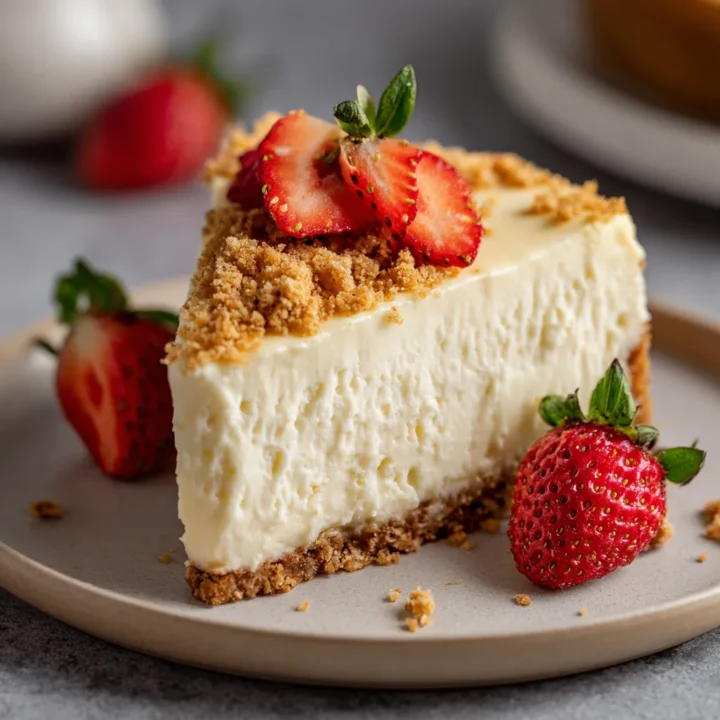
If you’re someone who loves dessert but also appreciates a lighter, more nourishing option, this light and creamy cottage cheese cheesecake hits the sweet spot. It delivers that dreamy, silky texture you expect from a classic baked cheesecake, but with a fresher, high-protein twist that feels genuinely satisfying.
Ingredients
Optional Graham Cracker Crust:
- ¾ cup graham cracker crumbs
- 1 tablespoon sugar
- Pinch of kosher salt
- 3 tablespoons unsalted butter, melted
Cheesecake Filling:
- 1 cup (227 g / 8 oz) cottage cheese (any fat level)
- ¼ cup (57 g / 2 oz) Greek yogurt (nonfat, 2 percent, or whole)
- 1 large egg
- 2 ½ tablespoons (32 g) sugar
- 1 ½ tablespoons (12 g) flour or cornstarch
- ½ teaspoon vanilla extract
- ½ teaspoon finely grated lemon zest
Optional Toppings:
- Fresh or cooked strawberries
- Granola
- Extra yogurt for serving
Instructions
1. Make the Crust (Optional)
- Preheat oven to 350°F (175°C). Grease a 6 inch springform pan.
- Combine graham crumbs, sugar, and salt.
- Add melted butter and mix until evenly moistened.
- Press firmly into the bottom of the pan.
- Bake 10–12 minutes until lightly golden. Cool while preparing filling.
2. Make the Cheesecake Filling
- Add cottage cheese, Greek yogurt, egg, sugar, flour or cornstarch, vanilla, and lemon zest to a blender or food processor.
- Blend until completely smooth.
- Pour filling over the crust (or directly into a greased pan if skipping the crust).
- Bake 30–35 minutes, until edges are set and center is softly jiggly.
3. Cool & Serve
- Cool to room temperature.
- Refrigerate at least 4 hours or overnight.
- Serve with berries, compote, granola, or extra yogurt.
Notes
- Blend well for creaminess: Allow at least 30–60 seconds to ensure all cottage cheese curds fully smooth out.
- Look for the “soft jiggle”: The center should wobble gently; this prevents overbaking.
- Chill thoroughly: The texture improves dramatically after a full overnight chill.
- Crustless option: Skip the crust for a lighter, lower calorie version.
- Make it ahead: This cheesecake keeps beautifully for 4–5 days in the fridge.
Nutrition Information:
Yield: 6 Serving Size: 1Amount Per Serving: Calories: 170Total Fat: 6gSaturated Fat: 3gSodium: 210mgCarbohydrates: 16gSugar: 12gProtein: 12g