




There’s something deeply comforting about pulling a pan of Classic Genovese Sourdough Focaccia from the oven—the kind with a golden olive-oil crust, soft airy crumb, and those signature dimples that catch pools of flavor. If you’ve ever wandered through the coastal streets of Genoa or dreamed of recreating authentic Italian bread at home, this recipe brings that experience right into your kitchen. It’s rustic, honest baking at its best, made with simple ingredients and time-tested technique.
What makes this Italian sourdough focaccia especially irresistible is its balance: crisp edges, a tender interior, and the gentle tang that only sourdough can deliver. Using sourdough discard not only adds depth of flavor, but also turns everyday baking into something resourceful and rewarding. Whether you’re serving it as a centerpiece for a casual meal, pairing it with soups and salads, or enjoying it warm with nothing more than olive oil, this Ligurian focaccia proves that homemade bread can be both approachable and unforgettable.
Key Benefits & Why You’ll Love This Recipe
This Classic Genovese Sourdough Focaccia is the kind of bread that quietly wins everyone over—no fuss, just incredible flavor and texture. It’s rooted in tradition yet perfectly suited for home bakers who want bakery-style results without complicated steps. If you’ve ever wanted an authentic Italian sourdough focaccia that feels achievable, this is the one.
Here’s what makes this recipe truly special:
- Deep, balanced flavor
Thanks to sourdough discard, this focaccia develops a gentle tang that enhances—not overpowers—the richness of extra-virgin olive oil. The result is a layered, savory flavor reminiscent of the breads found along the coast of Liguria. - Soft, airy crumb with a crisp finish
Proper hydration and fermentation create an interior that’s light and fluffy, while the olive-oil-kissed pan delivers that signature golden crust Genovese focaccia is known for. - A smart way to use sourdough discard
Instead of wasting discard, this recipe transforms it into something memorable. It’s practical, sustainable, and deeply satisfying—especially if you bake sourdough regularly. - Simple ingredients, authentic results
With pantry staples like bread flour, olive oil, rosemary, and olives, you’ll achieve a focaccia that tastes unmistakably Italian without specialty ingredients or equipment. - Versatile for any occasion
This sourdough focaccia works just as well for casual snacking as it does for entertaining. Serve it warm, slice it for sandwiches, or pair it with soups and salads—the bread adapts effortlessly.
If you enjoy hands-on baking that feels calm and rewarding, this recipe delivers. Each rise, dimple, and drizzle of olive oil brings you closer to a focaccia that’s rustic, flavorful, and proudly homemade—exactly how classic Genovese focaccia should be.
Ingredients
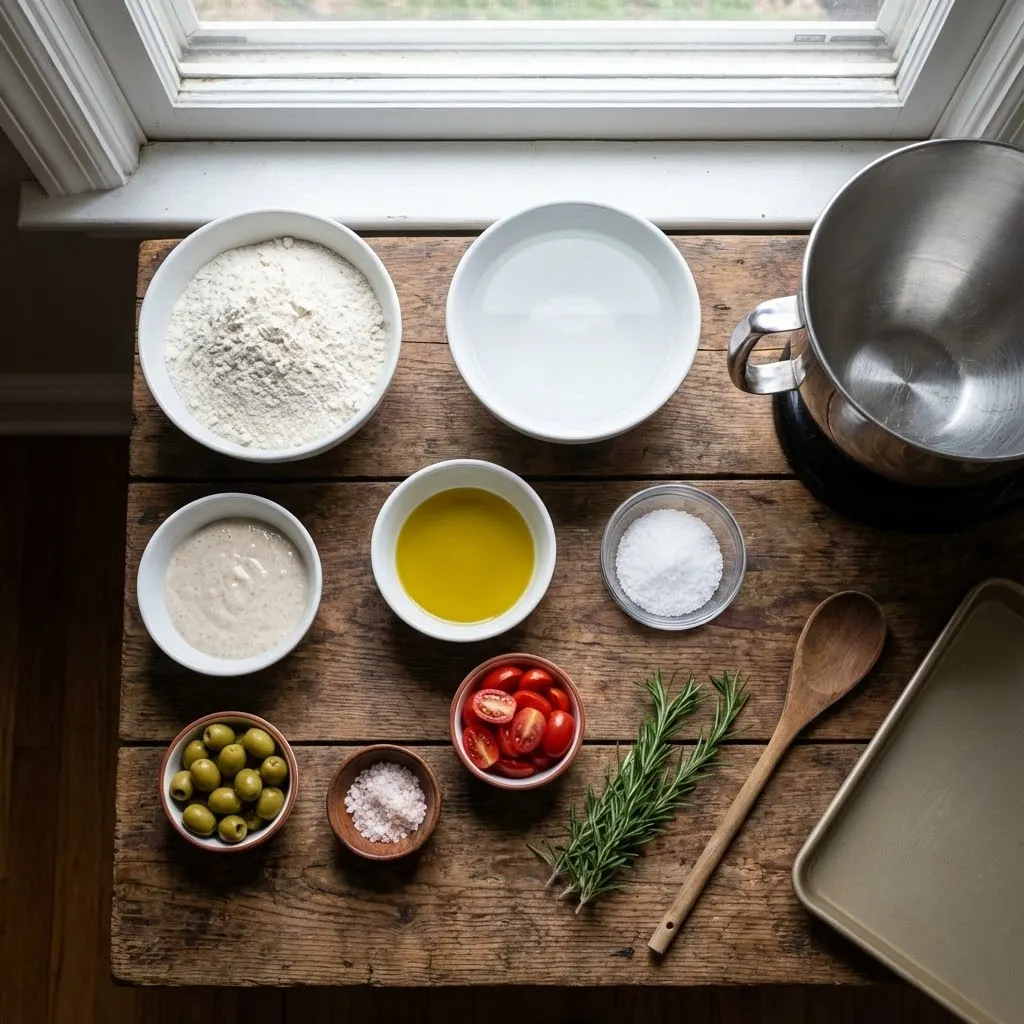
One of the joys of making Classic Genovese Sourdough Focaccia is how a short list of simple, high-quality ingredients comes together to create something truly special. Each component plays a clear role, so choosing well makes a noticeable difference in both flavor and texture.
Here’s what you’ll need—and why it matters:
- High-protein bread flour
Bread flour gives this Italian sourdough focaccia its structure and chew. A strong flour, such as one from King Arthur Baking Company, helps the dough hold air during fermentation, resulting in that light, airy crumb. - Water
Proper hydration is key. The water activates gluten development and supports fermentation, ensuring the dough stays soft and extensible rather than dry or dense. - Sourdough starter discard (room temperature)
This is the heart of the recipe. It adds gentle acidity, depth of flavor, and complexity while making excellent use of discard you might otherwise throw away. - Extra-virgin olive oil
Essential to authentic Genovese focaccia, olive oil enriches the dough, promotes a crisp golden crust, and delivers unmistakable Mediterranean flavor in every bite. - Fine sea salt
Salt balances the tang of the sourdough and enhances the overall flavor of the bread without overpowering it. - Green olives & cherry tomatoes
These classic toppings add bursts of briny and sweet flavor, creating contrast against the soft crumb and savory dough. - Fresh rosemary
A signature herb in Ligurian baking, rosemary perfumes the focaccia as it bakes and pairs beautifully with olive oil. - Flaked salt (for finishing)
Sprinkled on top before baking, it adds texture and a subtle crunch that elevates the final loaf.
Tip:
Because this recipe relies on minimal components, freshness matters. Use the best olive oil you have and ensure your sourdough discard is active and pleasantly aromatic—not overly sour—for the best results.
Instructions
Making Classic Genovese Sourdough Focaccia is a relaxed, step-by-step process that rewards patience more than effort. Think of it as guiding the dough rather than rushing it—each stage builds flavor, structure, and that signature airy crumb.
1. Build the starter base
In a bowl, mix:
- ½ cup bread flour
- ¼ cup water
- Sourdough starter discard
Stir with a wooden spoon until combined. Lightly dust the bowl of a stand mixer with flour, transfer the mixture inside, and cover loosely. Let it rest in a warm spot away from direct sunlight until doubled in size, about 2 hours. This step jumpstarts fermentation and flavor.
2. Mix and knead the dough
Attach the dough hook to your mixer and begin mixing the starter. Add:
- Remaining flour
- 3 tablespoons olive oil
- Fine sea salt
Slowly add the remaining water, just until the dough pulls away from the sides and forms a soft ball—you may not need all of it. Mix for 5 minutes until smooth and elastic.
3. Hand-knead and first rise
Transfer the dough to a lightly floured surface and knead by hand for another 5 minutes. Shape it into a ball, score the top lightly, cover with a clean cloth, and let it rise in a draft-free area until doubled in volume.
- Minimum: 2 hours
- Optional: overnight rise for deeper flavor
4. Shape and second rise
Lightly oil a shallow 12×16-inch baking pan. Gently knead the dough again for about 5 minutes, then stretch it into the pan using your hands—don’t force it; let it relax naturally.
Whisk together:
- 1 tablespoon olive oil
- 1 tablespoon water
Drizzle lightly over the dough, cover with plastic wrap, and let rise until doubled in height.
5. Dimple and top
Preheat your oven to 400°F (200°C). Using your fingertips, press deep dimples into the dough, spacing them about 1½ inches apart.
Evenly press in:
- Green olives
- Cherry tomato halves
Finish with rosemary leaves, flaked salt, and another light drizzle of the oil-water mixture.
6. Bake to perfection
Bake until the focaccia is deeply golden and cooked through, 20–25 minutes. The edges should be crisp, and the center soft and springy.
Once out of the oven, drizzle with extra olive oil and let it cool slightly before slicing.
Baker’s note:
Resist cutting too soon—allowing the focaccia to rest for a few minutes helps the crumb set and keeps it beautifully airy.
You’re now ready to move into fine-tuning, variations, and expert tips to make this focaccia your own.
Pro Tips and Variations
Once you’ve mastered the basics of this Classic Genovese Sourdough Focaccia, a few thoughtful tweaks and techniques can take it from great to unforgettable. These tips help you fine-tune texture, flavor, and appearance—while staying true to authentic Italian sourdough focaccia.
Pro Tips for Best Results
- Don’t rush fermentation
Time is your best ingredient. A longer rise allows the sourdough discard to develop complexity and gives the focaccia its signature light, airy crumb. - Use generous olive oil
Genovese focaccia is known for its rich olive oil flavor. Make sure the pan is well-oiled and don’t skip the final drizzle—it’s key to a crisp bottom and golden top. - Dimple with confidence
Press your fingertips all the way down to the pan. Deep dimples help trap olive oil and prevent large air bubbles from forming on the surface. - Watch the dough, not the clock
Rising times can vary based on room temperature and starter strength. The dough should look visibly puffy and relaxed before baking. - Bake until deeply golden
Pale focaccia lacks flavor. Aim for a rich, golden-brown color to ensure the crust is crisp and the interior fully baked.
Flavor Variations to Try
- Classic Ligurian style
Keep it simple with just rosemary, olive oil, and flaked salt for a truly traditional result inspired by Genoa. - Olive & herb focaccia
Add sliced olives throughout the dough and finish with thyme or oregano for a more aromatic bread. - Tomato-forward version
Use extra cherry tomatoes and gently squeeze them before adding to avoid excess moisture while boosting flavor. - Plain sourdough focaccia
Skip the toppings altogether and let the olive oil and sourdough shine—perfect for sandwiches or dipping.
These small adjustments give you flexibility without complicating the process. Whether you keep it traditional or customize it slightly, this sourdough focaccia remains forgiving, flavorful, and deeply satisfying to bake.
Serving & Pairing Suggestions
This Classic Genovese Sourdough Focaccia is wonderfully versatile, making it just as suited for a casual snack as it is for a complete meal. Its crisp olive-oil crust and soft, airy interior allow it to complement a wide range of flavors without overpowering them.
Simple Ways to Serve It
- Warm and fresh from the oven
Enjoy it on its own with a drizzle of extra-virgin olive oil. Sometimes, simplicity is all you need. - As a table bread
Slice it into squares and serve alongside soups, stews, or fresh salads for a rustic, Italian-inspired meal. - For sandwiches
Split the focaccia horizontally and fill it with roasted vegetables, fresh mozzarella, cured meats, or grilled chicken. Its structure holds fillings beautifully.
Perfect Pairings
- Dips and spreads
Pair with hummus, whipped ricotta, or olive tapenade to highlight its Mediterranean roots. - Light proteins
This sourdough focaccia works well with grilled fish, roasted chicken, or simple egg dishes. - Fresh produce
Serve with tomato salads, marinated olives, or seasonal vegetables to echo the flavors of coastal Italian cooking from Liguria.
Entertaining Tip
Cut the focaccia into small pieces and arrange it on a board with cheeses, olives, and cured meats. It instantly becomes a crowd-pleasing appetizer that looks impressive without extra effort.
No matter how you serve it, this focaccia brings warmth and comfort to the table—proof that good bread can elevate even the simplest meal.
Tools and Equipment Guide
You don’t need a professional bakery setup to make excellent Classic Genovese Sourdough Focaccia, but having the right tools makes the process smoother and more enjoyable. These essentials help you achieve proper dough development, even baking, and that signature crisp-yet-airy texture.
Essential Tools
- Mixing bowls
You’ll need at least one medium bowl for building the starter base and another for handling the dough during rising. - Stand mixer with dough hook (recommended)
While this focaccia can be mixed by hand, a stand mixer simplifies kneading and ensures consistent gluten development—especially helpful for slightly wetter doughs. - Wooden spoon or sturdy spatula
Ideal for mixing the starter and initial dough before kneading begins. - 12×16-inch shallow baking pan
This size allows the dough to spread evenly and bake with a crisp bottom while maintaining a soft interior. A shallow pan is key for authentic Genovese focaccia. - Kitchen scale (optional but helpful)
Measuring flour by weight improves accuracy and consistency, especially important in sourdough baking.
Helpful Extras
- Bench scraper
Makes handling and transferring sticky dough easier and keeps your work surface tidy. - Plastic wrap or clean kitchen towel
Essential for covering the dough during rises to prevent drying. - Pastry brush or spoon
Useful for evenly distributing the olive oil and water mixture over the dough. - Oven thermometer (optional)
Ensures your oven is truly at the right temperature for even browning and proper crust formation.
Tool tip:
Well-oiled pans and clean tools make a noticeable difference. A generously greased pan not only prevents sticking but also contributes to the crisp, golden base that defines great sourdough focaccia.
With these tools ready, you’ll feel confident moving through each stage of the recipe—from mixing to baking—with ease and control.
Troubleshooting Common Issues
Even a well-tested Classic Genovese Sourdough Focaccia can behave differently depending on your kitchen, flour, or starter. If something doesn’t look quite right, don’t worry—most issues have simple fixes. Here’s how to troubleshoot like a confident baker.
Focaccia Turned Out Dense
- Possible cause: Under-fermented dough or inactive sourdough discard
- Fix: Allow more rising time and ensure your discard is bubbly or recently fed. The dough should visibly puff up before baking.
Dough Feels Too Sticky
- Possible cause: High hydration or warm room temperature
- Fix: Lightly oil your hands instead of adding extra flour. Sticky dough is normal and helps create an airy crumb.
Focaccia Is Pale or Lacks Flavor
- Possible cause: Too little olive oil or underbaking
- Fix: Be generous with olive oil and bake until deeply golden. Color equals flavor in authentic Italian focaccia.
Toppings Sink or Burn
- Possible cause: Toppings placed on weak dough or too exposed
- Fix: Press olives and tomatoes gently into the dough and lightly coat them with olive oil to prevent scorching.
Bottom Is Soggy Instead of Crisp
- Possible cause: Insufficient oil in the pan or underbaking
- Fix: Oil the pan thoroughly and place the pan on the lower rack of the oven for the last few minutes if needed.
Uneven Rise or Large Air Bubbles
- Possible cause: Shallow dimpling
- Fix: Press firmly with your fingertips all the way down to the pan. Deep dimples encourage even rising and proper structure.
Baker’s reassurance:
Sourdough baking is as much about observation as it is about timing. Each bake teaches you something new, and small adjustments quickly lead to consistently great results—just like the traditional breads made throughout Liguria.
With these solutions in mind, you’ll be well-equipped to bake confident, flavorful focaccia every time.
FAQs
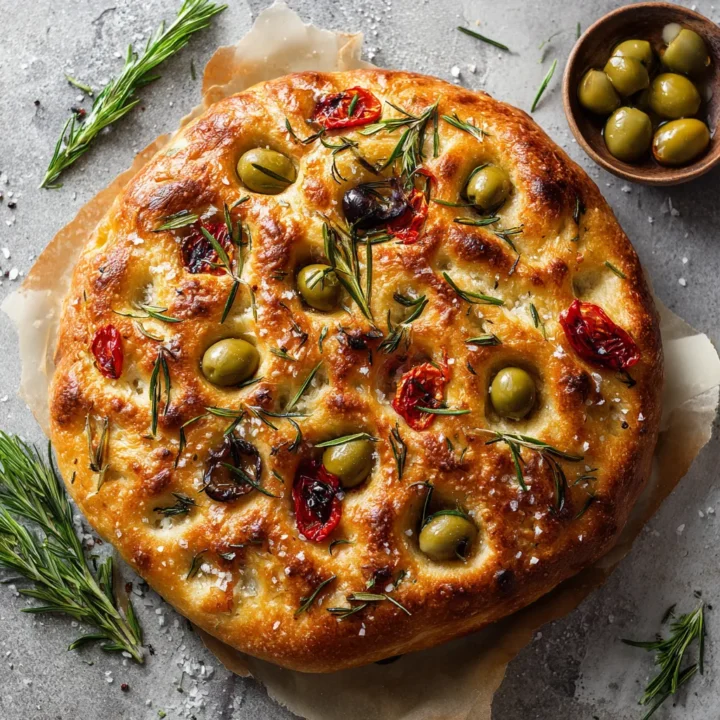
Classic Genovese Sourdough Focaccia
This Classic Genovese Sourdough Focaccia is the kind of bread that quietly wins everyone over—no fuss, just incredible flavor and texture.
Ingredients
- 2 ½ cups high-protein bread flour, divided
- 1 cup water, divided (use as needed)
- ¾ cup sourdough starter discard, room temperature
- 6 tablespoons extra-virgin olive oil, divided
- 1 teaspoon fine sea salt
- 1 tablespoon water (for topping mixture)
- 12 pitted green olives
- 6 cherry tomatoes, halved
- 1 sprig fresh rosemary
- ½ teaspoon flaked salt
Instructions
- Prepare the starter base: Mix ½ cup flour, ¼ cup water, and sourdough discard until combined. Transfer to a lightly floured stand mixer bowl, cover, and let rise in a warm place until doubled (about 2 hours).
- Mix the dough: Attach the dough hook. Add remaining flour, 3 tablespoons olive oil, and fine sea salt. Gradually add remaining water until the dough pulls from the sides and forms a soft ball. Mix for 5 minutes.
- Knead and first rise: Knead by hand for 5 minutes. Shape, lightly score, cover, and let rise until doubled (at least 2 hours or up to overnight).
- Shape and second rise: Oil a 12×16-inch pan generously. Gently knead the dough again and stretch it into the pan. Whisk 1 tablespoon olive oil with 1 tablespoon water and drizzle lightly over the dough. Cover and let rise until doubled in height.
- Dimple and top: Preheat oven to 400°F (200°C). Press deep dimples with fingertips. Add olives and tomatoes, pressing them into the dough. Sprinkle rosemary, flaked salt, and a little more oil-water mixture.
- Bake: Bake for 20–25 minutes until deeply golden and cooked through. Finish with a drizzle of olive oil before serving.
Notes
- Hydration matters: Slightly sticky dough equals a lighter, airier crumb—avoid adding excess flour.
- Olive oil is essential: Generous oil in the pan creates the signature crisp bottom and rich flavor.
- Flavor boost: An overnight rise enhances depth and aroma.
- Storage: Keep at room temperature for up to 2 days or freeze well-wrapped; reheat to refresh the crust.
Nutrition Information:
Yield: 10 Serving Size: 1Amount Per Serving: Calories: 260Total Fat: 12gSaturated Fat: 2gSodium: 420mgCarbohydrates: 32gFiber: 2gProtein: 6g