




There are some recipes that do not just feed you — they settle something in you. This One Pot Turmeric Chicken and Rice is exactly that kind of dish. It is the kind of meal you turn to when the week has been long, the evening is short, and you still want something on the table that feels genuinely made with care. No shortcuts on flavor. No stack of pots to wash afterward. Just one pot, one beautiful golden result, and a kitchen that smells absolutely incredible.
What makes this recipe stand out in a world full of weeknight dinners is its layering of warm, aromatic spices — ground turmeric, curry powder, cumin, cinnamon, and fresh ginger — building a depth of flavor that most people associate with hours of slow cooking. But here is the thing: it comes together in well under an hour. The jasmine rice soaks up every drop of the spiced chicken stock as it simmers, becoming fluffy, fragrant, and deeply savory. The chicken breast, seared first in turmeric-kissed butter until golden, stays tender and juicy all the way through.
Beyond how incredible it tastes, turmeric brings something extra to this dish. Its active compound, curcumin, is widely recognized for its anti-inflammatory properties, making this not just a comforting dinner but a genuinely nourishing one. You are not sacrificing anything here — not convenience, not nutrition, and certainly not flavor.
Whether you are cooking for a busy family, meal prepping for the week ahead, or simply craving a bowl of something warm and deeply satisfying, this one pot turmeric chicken and rice recipe belongs in your regular rotation. And the best part? Every single component — the protein, the grains, the vegetables — cooks together in one pan, leaving you with minimal cleanup and maximum reward.
Why You Will Love This One Pot Turmeric Chicken and Rice
Let’s be honest — the best recipes are the ones that make you look like you spent hours in the kitchen when you really did not. This one pot turmeric chicken and rice does exactly that. It delivers bold, layered flavors, a stunning golden color, and a satisfying, complete meal, all from a single pot and a handful of pantry staples. Here is exactly why this recipe is going to earn a permanent spot in your weekly dinner rotation.
It Is a True One Pot Meal — and That Actually Matters
There is something deeply satisfying about knowing that when dinner is done, cleanup is practically done too. Everything in this recipe — from searing the chicken to toasting the spices to simmering the jasmine rice in spiced chicken stock — happens in the same pot. No extra pans, no juggling multiple burners, no chaos. Just one Dutch oven or large casserole pot doing all the work for you.
The Flavor Is Anything but Simple
Do not let the short ingredient list fool you. The combination of ground turmeric, curry powder, cumin, cinnamon, and fresh ginger creates a warm, aromatic spice blend that builds real depth with every step. When you sear the chicken in turmeric-infused butter, you are already setting the foundation. When you deglaze with chicken stock and scrape up those browned bits from the bottom of the pot, you are pulling every last bit of flavor into the dish. By the time the jasmine rice has absorbed all of that spiced broth, the result is something genuinely crave-worthy.
It Is Nourishing Without Trying Too Hard
This is comfort food that also happens to be good for you — and you never feel like you are compromising. Here is what you are getting in every bowl:
- Lean protein from skinless, boneless chicken breast to keep you full and satisfied
- Complex carbohydrates from jasmine rice for steady, lasting energy
- Antioxidant-rich turmeric, whose active compound curcumin is widely celebrated for its anti-inflammatory properties
- Fresh ginger and garlic, two of the most powerful flavor-forward aromatics that also support overall wellness
- Green beans, adding a welcome crunch, color, and a boost of fiber to round out the meal
You are not just feeding your family dinner. You are feeding them well.
It Is Incredibly Versatile
One of the things that makes this recipe so easy to love is how naturally it adapts to what you have on hand or what your household prefers. A few ways you can make it your own:
- Swap chicken breast for bone-in chicken thighs for a richer, more indulgent result
- Use basmati rice in place of jasmine rice if that is what is in your pantry
- Add a handful of spinach or swap the green beans for whatever vegetable needs using up
- Dial up the curry powder if your family loves bold, punchy spice
- Serve it with a cooling yogurt-based raita on the side to balance the warmth of the spices
It Is the Perfect Weeknight Dinner and Beyond
Whether you are feeding a hungry family on a Tuesday evening, meal prepping for the days ahead, or cooking something comforting to share with someone who could use a thoughtful, home-cooked meal, this one pot turmeric chicken and rice rises to every occasion. It reheats beautifully, it scales up without any fuss, and it tastes even better the next day when the spices have had more time to settle into every grain of rice.
This is the kind of recipe that becomes a household staple — not because it is flashy, but because it is reliably, consistently wonderful every single time you make it.
Ingredients for One Pot Turmeric Chicken and Rice
Before you even turn on the stove, taking a moment to understand what goes into this dish — and why — makes the whole cooking experience more intentional and enjoyable. Every ingredient here has a purpose. Nothing is filler. Let us walk through everything you will need, along with a few notes to help you shop smart and cook with confidence.
The Full Ingredient List
(Serves 4)
For the Chicken:
- 1 1/2 pounds skinless, boneless chicken breast, cut into 1 1/2-inch pieces
- Salt and freshly ground black pepper, to taste
- 1 tablespoon unsalted butter
- 1 teaspoon ground turmeric
For the Aromatics and Vegetables:
- 1 cup chopped onion
- 2 teaspoons peeled and minced fresh ginger
- 2 cloves garlic, peeled and minced
- 1 cup chopped tomato
- 2 cups green beans, cut into 2-inch pieces
For the Spice Blend:
- 1 teaspoon curry powder
- 1 pinch ground cinnamon
- 1/4 teaspoon ground cumin
For the Rice and Cooking Liquid:
- 1 cup jasmine rice
- 2 bay leaves
- 2 teaspoons fish sauce
- 1 1/2 cups chicken stock
Key Ingredients and What They Bring to the Dish
Understanding the role of each ingredient transforms you from someone following a recipe into someone who truly cooks. Here is a closer look at the building blocks of this dish.
Ground Turmeric This is the soul of the recipe. Beyond lending the dish its signature golden color, turmeric carries a warm, subtly earthy flavor that ties every element together. Its active compound, curcumin, is also the reason this dish earns its reputation as a genuinely anti-inflammatory meal. When it melts into the butter at the start of cooking, it blooms beautifully and coats the chicken with color and flavor right from the first step.
Chicken Breast Cutting the chicken into 1 1/2-inch pieces ensures even cooking and maximum surface area for browning. Searing the pieces first in turmeric butter locks in the juices and creates a golden crust that adds tremendous depth to the overall dish. Lean, protein-rich, and satisfying, chicken breast is the ideal partner for the bold spices in this recipe.
Jasmine Rice Jasmine rice is the right choice here for a very specific reason — it is fragrant, slightly floral, and has a natural affinity for absorbing spiced cooking liquids beautifully. As it simmers in the turmeric-laced chicken stock, it soaks up every layer of flavor the pot has developed, becoming fluffy, golden, and deeply savory by the time it is done.
Fresh Ginger and Garlic This aromatic duo forms the flavor backbone of the dish. Minced fresh ginger brings a bright, peppery warmth that cuts through the richness of the butter and spices. Garlic deepens the savory base and, when cooked together with the onion until just beginning to brown, creates an irresistible foundation for everything that follows.
Curry Powder, Cumin, and Cinnamon These three spices work in quiet harmony. Curry powder provides a familiar warmth and complexity. Cumin adds a toasty, slightly smoky undertone. And the pinch of cinnamon — do not skip it — is the unexpected touch that adds a gentle sweetness and rounds out the spice blend in a way that makes people wonder what your secret ingredient is.
Fish Sauce This is the ingredient that surprises people most, and the one they thank later. Fish sauce adds a deep, savory umami quality to the cooking liquid without making the dish taste like seafood in any way. It is the kind of background note that makes the overall flavor feel more complete and satisfying. A little goes a long way.
Chicken Stock The cooking liquid that brings everything together. As the rice simmers, it absorbs the stock along with all the aromatics, spices, and fond from the bottom of the pot. Use a good-quality chicken stock here — it genuinely makes a difference in the final depth of flavor.
Green Beans and Tomato The green beans provide color, texture, and a mild freshness that balances the warmth of the spices. The chopped tomato breaks down during cooking, adding a subtle acidity and body to the sauce that helps the rice cook evenly and stay moist throughout.
Smart Substitutions and Variations
Life does not always look like a perfectly stocked pantry, and this recipe is flexible enough to work with what you have. Here are some easy swaps worth knowing:
- Chicken thighs instead of breast — Boneless, skinless chicken thighs work beautifully here and will give you a slightly richer, more forgiving result since they are harder to overcook
- Basmati rice instead of jasmine — A great alternative with a slightly nuttier flavor and equally good absorption qualities; just keep the liquid ratio the same
- Vegetable stock instead of chicken stock — Works well if you are cooking for someone who avoids meat-based broths
- Soy sauce or coconut aminos instead of fish sauce — A suitable swap for those who prefer to avoid fish sauce, though the depth of umami will be slightly different
- Frozen green beans — Perfectly acceptable if fresh are not available; just add them a few minutes later in the cooking process so they do not become too soft
- Olive oil instead of butter — Works fine for searing the chicken, though you will lose a touch of the richness that butter adds to the turmeric base
A Note on Prep Before You Cook
One of the best habits you can develop in the kitchen is having everything ready before the heat goes on. This recipe moves at a fairly brisk pace once you start — the aromatics go in quickly after the chicken comes out, and the spices follow almost immediately after. Take five minutes before you begin to chop your onion, mince your ginger and garlic, prep your green beans, and measure out your spices. That small act of preparation makes the actual cooking feel calm, confident, and genuinely enjoyable.
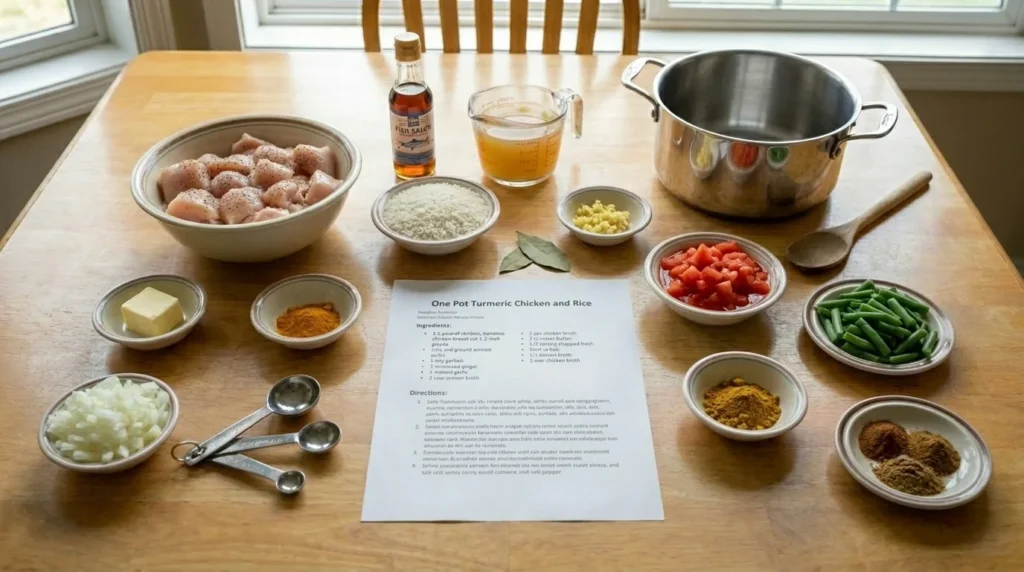
How to Make One Pot Turmeric Chicken and Rice
This is where everything comes together, and the good news is that the process is far more straightforward than the final result might suggest. Each step builds on the last, layering flavor into the pot in a way that feels almost effortless once you understand the logic behind it. Follow along and you will have a golden, fragrant, deeply satisfying dinner on the table in under an hour.
Step 1: Season and Dry the Chicken
Pat your chicken pieces thoroughly dry using paper towels. This step is more important than it might seem — moisture on the surface of the chicken creates steam in the pan, which prevents proper browning. A dry surface means a golden, flavorful sear, and that sear is the first major layer of flavor in this dish.
Once dry, season the chicken generously on all sides with salt and freshly ground black pepper. Set it aside while you prepare your pot.
Quick Tip: Do not rush the drying step. The difference between steamed, pale chicken and properly seared, golden chicken begins right here.
Step 2: Bloom the Turmeric and Sear the Chicken
Place your Dutch oven or large casserole pot over medium-high heat and add the tablespoon of unsalted butter. As the butter melts, sprinkle in the ground turmeric and let it bloom for just a moment — you will notice the butter turn a vivid, warm golden color almost immediately. This is exactly what you want. Blooming spices in fat activates their flavor compounds and intensifies their impact throughout the entire dish.
Add the seasoned chicken pieces in a single layer and resist the urge to move them around. Let them cook undisturbed for 2 to 3 minutes until lightly browned on the bottom, then turn each piece and brown the other side for another 2 to 3 minutes.
Once browned, transfer the chicken to a plate and set it aside. The chicken does not need to be fully cooked through at this stage — it will finish cooking later as it simmers with the rice. Keep it warm and hold onto any juices that accumulate on the plate.
Quick Tip: Cook the chicken in a single layer with a little space between pieces. Crowding the pan drops the temperature and prevents browning. If your pot is on the smaller side, sear the chicken in two batches.
Step 3: Build the Aromatic Base
Without cleaning the pot — and this is important — add the chopped onion, minced ginger, and minced garlic directly to the same turmeric-stained, chicken-flavored butter. Those browned bits clinging to the bottom of the pot are pure concentrated flavor, and everything going in next is going to help lift them.
Cook the aromatics over medium-high heat, stirring occasionally, until they begin to soften and take on a little color at the edges — about 2 minutes. You are not looking to fully caramelize them, just to take the raw edge off and let their natural sweetness start to develop.
Quick Tip: Keep the heat at medium-high here and stir just enough to prevent burning. A little color on the onion and garlic is a good thing — it adds depth without bitterness.
Step 4: Add the Vegetables, Spices, and Rice
Now comes one of the most rewarding moments in this recipe. Add the chopped tomato, green beans, curry powder, cinnamon, and cumin to the pot, followed by the cup of jasmine rice. Stir everything together constantly for about one minute. You will notice the spices become intensely fragrant almost immediately — this is the process of toasting the spices in the residual fat and juices in the pot, and it is what gives this dish its remarkable depth of flavor.
Do not skip this step or rush it. That single minute of stirring and toasting makes an enormous difference to the final result.
Step 5: Return the Chicken and Add the Cooking Liquid
Return the seared chicken pieces to the pot along with any juices that have collected on the resting plate — those juices are full of flavor and you want every drop back in the dish. Add the bay leaves, fish sauce, and chicken stock.
Now, using your wooden spoon, scrape up all the browned bits from the bottom of the pot and stir them into the liquid. This technique — known in professional kitchens as deglazing — pulls every bit of caramelized flavor from the bottom of the pot and distributes it evenly throughout the dish. Do not leave a single bit behind.
Quick Tip: Make sure the bay leaves are fully submerged in the liquid so they can infuse the dish properly as it simmers.
Step 6: Simmer, Cover, and Let the Rice Do Its Work
Increase the heat and bring the contents of the pot to a full boil. Once boiling, place the lid on, reduce the heat to low, and let everything simmer gently for 10 minutes. During this time, the rice will begin absorbing the spiced stock and the chicken will continue cooking through in the aromatic liquid.
After the initial 10 minutes, adjust the lid so it partially covers the pot, leaving a small gap to vent. Continue simmering for another 10 to 15 minutes, or until the rice is tender and has absorbed most of the cooking liquid.
Quick Tip: The partial venting in the final stage of cooking allows excess moisture to escape gradually, which helps the rice finish with the right texture — fluffy and separate rather than wet and clumped.
Step 7: Rest, Uncover, and Serve
Remove the pot from the heat, take the lid off completely, and let the dish stand undisturbed for 5 minutes. This resting period is not optional — it allows the residual steam to finish cooking the rice evenly, lets the flavors settle and meld, and gives the dish a moment to come together in the most complete way possible.
Remove and discard the bay leaves, give everything a gentle stir, and serve warm directly from the pot. If you have prepared a cooling raita on the side, now is the moment to bring it to the table — its creamy, tangy freshness is a wonderful contrast to the warm spices in the dish.
At a Glance: Cooking Timeline
| Step | Action | Time |
| 1 | Dry and season chicken | 2 minutes |
| 2 | Bloom turmeric, sear chicken | 5 to 6 minutes |
| 3 | Cook aromatics | 2 minutes |
| 4 | Add vegetables, spices, rice | 1 to 2 minutes |
| 5 | Return chicken, add liquid, deglaze | 2 minutes |
| 6 | Simmer covered, then vented | 20 to 25 minutes |
| 7 | Rest and serve | 5 minutes |
| Total | Under 45 minutes |
Pro Tips and Variations for the Best One Pot Turmeric Chicken and Rice
Knowing how to follow a recipe is one thing. Knowing how to cook it with real confidence — understanding the why behind each decision and how to adapt it to your own kitchen and preferences — is what takes a good dish and makes it genuinely great. This section is everything you need to know to own this recipe completely.
Pro Tips for a Flawless Result Every Time
- Dry Your Chicken Properly — Every Single Time
It bears repeating because it matters that much. Patting the chicken pieces completely dry before seasoning and searing is the single most impactful step you can take for better flavor. Moisture is the enemy of a proper sear. When wet chicken hits a hot pan, it steams instead of browns, and you lose that golden, caramelized crust that forms the very first flavor layer of this entire dish. Paper towels and thirty seconds of your time make all the difference.
- Do Not Skip Blooming the Turmeric in Butter
Turmeric is a fat-soluble spice, which means its flavor compounds and the beneficial properties of curcumin are best released and absorbed when heated in fat. Melting the butter first, then adding the turmeric and letting it sizzle for just a moment before the chicken goes in, is not just a visual step — it is a flavor step. The butter turns golden, the kitchen fills with that warm, earthy aroma, and every piece of chicken that touches that pan gets coated in something truly special.
- Never Skip Deglazing the Pot
Those browned bits stuck to the bottom of the pot after searing the chicken are not a mess to be avoided — they are concentrated flavor waiting to be rescued. When you add the chicken stock and scrape the bottom of the pot with a wooden spoon, you are pulling all of that depth into the cooking liquid. This is what gives the final dish its rich, complex, restaurant-quality undertone. A clean pot bottom before simmering means flavor left behind.
- Control Your Simmer — Low and Steady Wins
One of the most common mistakes with one pot rice dishes is cooking on too high a heat during the simmering stage. If the heat is too aggressive, the liquid evaporates too quickly before the rice has a chance to cook through, and you end up with crunchy, undercooked grains and overcooked chicken. Once you bring the pot to a boil and cover it, reduce the heat to a genuine low simmer — barely bubbling — and let time do the work. Patience here is always rewarded.
- Respect the Resting Period
When you pull the pot off the heat after simmering, the temptation to lift the lid and dive straight in is real. Resist it. Those final 5 minutes of resting time allow the residual steam inside the pot to redistribute evenly through the rice, finishing the cooking process gently and producing that perfectly fluffy, separate texture. Cutting the resting short often means the rice at the bottom is done while the top layer is still slightly underdone.
- Season in Layers, Not All at Once
This recipe gives you multiple opportunities to season — when you salt the chicken before searing, when the aromatics go in, and again after the dish has rested and you taste before serving. Take every one of those opportunities. Seasoning in layers builds complexity in a way that salting at the end simply cannot replicate. Always taste before you serve and adjust with a pinch of salt or a crack of black pepper if needed.
Smart Variations Worth Trying
One of the most appealing things about this recipe is how naturally it lends itself to adaptation. Once you have made it once and understand the core technique, the variations below are easy, rewarding, and each one produces a dish that feels fresh and new.
Use Chicken Thighs for a Richer Result Boneless, skinless chicken thighs are a fantastic alternative to chicken breast in this recipe. They are naturally higher in fat, which means they are more forgiving during cooking — much harder to dry out — and they produce a deeper, more indulgent flavor in the finished dish. If you prefer bone-in thighs, extend the total simmering time by about 10 minutes and ensure the internal temperature reaches 165 degrees Fahrenheit before serving.
Make It Creamier with Coconut Milk Replace a portion of the chicken stock — roughly half a cup — with full-fat or light coconut milk. This small change adds a subtle richness and a gentle sweetness that pairs beautifully with the turmeric and curry powder, giving the dish an almost Southeast Asian character. The rice will absorb the coconut-laced liquid and come out slightly creamier and more luxurious.
Add More Vegetables for a Heartier Bowl This recipe welcomes additional vegetables without any fuss. Diced zucchini, baby spinach stirred in at the end, frozen peas added in the final few minutes of cooking, or thinly sliced bell peppers added with the onion are all excellent choices. Each one adds color, nutrition, and texture without disrupting the balance of the dish.
Turn Up the Heat If your household loves bold, spicy food, this recipe responds beautifully to a little heat. Add a pinch of cayenne pepper or a teaspoon of red pepper flakes along with the other spices in step four. Alternatively, serve the finished dish with a drizzle of your favorite chili oil or a few slices of fresh red chili on top.
Make It Dairy-Free Replacing the butter with a good-quality olive oil or coconut oil is a seamless swap that keeps the dish completely dairy-free without sacrificing the blooming step. Coconut oil in particular pairs wonderfully with the turmeric and brings its own subtle warmth to the spice base.
Meal Prep and Make-Ahead This dish is an exceptional meal prep candidate. It stores well in an airtight container in the refrigerator for up to 3 days and reheats beautifully with a small splash of chicken stock or water stirred in to loosen the rice. For freezing, portion the cooled dish into individual airtight containers and freeze for up to 2 months. Thaw overnight in the refrigerator before reheating gently on the stovetop or in the microwave.
Spice Adjustments for Every Palate
Not every household eats at the same spice level, and the beauty of cooking from scratch is that you are fully in control. Use this simple guide as your reference:
| Preference | Adjustment |
| Mild | Reduce curry powder to 1/2 teaspoon, omit cumin |
| Medium (as written) | Follow the recipe exactly |
| Bold and warming | Double the curry powder and cumin, add 1/2 tsp smoked paprika |
| Spicy | Add 1/4 to 1/2 teaspoon cayenne pepper with the spice blend |
| Extra aromatic | Add 2 to 3 cardamom pods and a small cinnamon stick with the bay leaves |
Serving and Pairing Suggestions
Getting a dish like this one pot turmeric chicken and rice onto the table is already an achievement worth celebrating. But how you serve it — what you pair it with, how you garnish it, and what you offer alongside it — can elevate the entire experience from a simple weeknight dinner to something that genuinely feels special. Here is everything you need to know to serve this dish at its very best.
How to Serve It
This dish is most rewarding served straight from the pot, family-style, right at the center of the table. There is something wonderfully communal about letting everyone scoop their own portion from that golden, fragrant pot — it sets a warm, relaxed tone for the meal that matches the spirit of the recipe perfectly.
A few things to keep in mind when plating:
- Serve it warm, not piping hot straight off the stove. The five-minute resting period before serving allows the flavors to settle and the rice to reach its ideal texture, and the dish holds its heat beautifully during that time.
- Use a wide, shallow bowl rather than a deep plate if possible. The wider surface allows the golden rice to be displayed in all its glory, and it gives you room to arrange your garnishes in a way that looks as good as it tastes.
- Spoon the chicken pieces on top of the rice rather than buried beneath it. This gives each serving a more intentional, composed appearance without requiring any extra effort.
The Raita: Your Most Important Garnish
If there is one accompaniment you should not skip with this recipe, it is a simple, cooling raita. The warm, earthy spices in the dish — turmeric, curry powder, cumin, and cinnamon — create a beautifully layered heat that a creamy, tangy raita balances in the most satisfying way imaginable.
A basic raita comes together in minutes and requires no cooking whatsoever:
- 1 cup plain whole-milk yogurt
- 1/2 cucumber, grated and lightly squeezed of excess moisture
- 1 tablespoon fresh mint or cilantro, finely chopped
- A pinch of salt and a squeeze of fresh lemon juice
Stir everything together, taste, adjust the seasoning, and serve chilled alongside the warm dish. The contrast between the cooling raita and the golden, spiced rice is one of the most pleasurable combinations this recipe has to offer — do not underestimate it.
Garnish Ideas That Make a Visual Impact
A dish this vibrant deserves a finishing touch that honors its color and warmth. Consider one or more of the following garnishes before bringing it to the table:
- Fresh cilantro or flat-leaf parsley — A generous handful scattered over the top adds a pop of green that contrasts beautifully with the golden rice and immediately signals freshness
- Thinly sliced red chili — For a visual and flavor contrast that also hints at a little heat for those who want it
- A wedge of fresh lemon — Served on the side, a squeeze of lemon just before eating brightens every flavor in the bowl and cuts through the richness of the spices
- Toasted slivered almonds or pine nuts — An optional but wonderful textural addition that adds a gentle crunch and a nutty depth to each bite
- A light drizzle of good olive oil — Just a thin drizzle over the finished dish adds a subtle richness and a beautiful sheen to the surface
Side Dishes That Complement This Recipe
While this dish is absolutely complete as a standalone meal — protein, grains, and vegetables all in one pot — there are occasions when you want to round out the table with something alongside it. These pairings work beautifully without competing with the bold, warm flavors of the main dish.
A Simple Green Salad A lightly dressed salad of mixed greens, thinly sliced cucumber, and a bright lemon vinaigrette provides a crisp, refreshing counterpoint to the richness of the turmeric rice. Keep the dressing simple — the salad’s role here is to refresh the palate between bites, not to steal the spotlight.
Warm Flatbread or Naan Soft, warm flatbread or naan is a natural companion to this dish. It is ideal for scooping up the spiced rice and soaking up any remaining cooking liquid at the bottom of the bowl. If you have a good store-bought naan on hand, a quick 30 seconds in a dry skillet over medium heat is all it needs to come back to life.
Roasted Cauliflower Simply roasted cauliflower florets — tossed in olive oil, salt, and a pinch of turmeric before going into a hot oven — mirror the warm spice profile of the main dish while adding a caramelized, slightly nutty dimension to the table.
A Cucumber and Tomato Salad Diced cucumber, ripe tomato, a little red onion, fresh herbs, and a splash of lemon juice make a bright, refreshing side that echoes some of the ingredients already in the dish — particularly the tomato — while adding a cool, crunchy contrast.
Lentil Soup If you are serving this as part of a larger spread or feeding a crowd, a simple lentil soup on the side adds warmth, additional protein, and a heartiness that makes the meal feel abundant and generous without requiring much extra effort in the kitchen.
Drink Pairings Worth Considering
The warm, aromatic spice profile of this dish pairs wonderfully with drinks that either mirror its warmth or offer a cooling contrast.
- Still or sparkling water with fresh lemon and mint — Clean, refreshing, and endlessly appropriate
- A cold mango lassi — The sweet, creamy character of a mango lassi is one of the most natural partners imaginable for turmeric-spiced food
- Chilled cucumber lemonade — The cool freshness of cucumber and the brightness of lemon work in perfect harmony with the warm spices in the dish
- Unsweetened iced green tea — Light, subtly grassy, and refreshing without overwhelming the flavors on the plate
Leftovers: Making the Most of What Remains
This recipe reheats exceptionally well, and in many households the leftovers are even more popular than the original serving — the spices continue to develop overnight and the flavors become even more cohesive and rounded.
- Refrigerator: Store in an airtight container for up to 3 days. When reheating, add a small splash of chicken stock or water and warm gently on the stovetop over low heat or in the microwave, stirring halfway through.
- Freezer: Portion into individual airtight, freezer-safe containers and freeze for up to 2 months. Thaw overnight in the refrigerator before reheating.
- Repurposing leftovers: Leftover turmeric chicken and rice makes a wonderful filling for a warm flatbread wrap, a base for a quick fried rice the next day, or a hearty topping for a simple green salad with a drizzle of lemon tahini dressing.
Tools and Equipment Guide
One of the most underappreciated aspects of a recipe this straightforward is how much the right equipment contributes to the final result. You do not need a professional kitchen or an extensive collection of specialty tools to make this dish beautifully — but choosing the right pot, having the right utensils on hand, and understanding why each piece of equipment matters will make the entire cooking process smoother, more enjoyable, and more consistently successful. Here is everything you need, and why it earns its place on your stovetop.
The Most Important Piece: Your Pot
Everything in this recipe lives or dies by the vessel you cook it in. This is not an exaggeration — the pot you choose directly affects how evenly the chicken sears, how consistently the rice cooks, and how well the dish holds its heat during the resting period. Here are your best options, ranked by preference.
Dutch Oven — The First Choice A Dutch oven is the ideal vessel for this recipe, and if you own one, this is the moment to use it. Its heavy base distributes heat with remarkable evenness, eliminating hot spots that can scorch the bottom of the rice during the long simmer. Its thick walls retain heat exceptionally well, which means the dish continues cooking gently even after you reduce the heat to low. The tight-fitting lid creates the perfect environment for steaming the rice to a fluffy, even finish. A 5 to 6 quart Dutch oven is the ideal size for this recipe as written.
Large Casserole Pot — An Excellent Alternative If you do not own a Dutch oven, a large, heavy-bottomed casserole pot with a well-fitting lid is a perfectly capable substitute. Look for one with a thick base — thin-bottomed pots conduct heat unevenly and increase the risk of the rice sticking or burning during the simmering stage. Aim for a pot with at least a 5 quart capacity to give everything enough room to cook without crowding.
Deep, Wide Skillet with a Lid — A Workable Option A large, deep skillet — sometimes called a sauté pan — with a tight-fitting lid can work in a pinch, particularly if it has a heavy base. The shallower depth means you will need to watch the liquid level a little more carefully during simmering, as it can reduce more quickly than in a deeper pot. If your skillet lid does not fit perfectly, a piece of aluminum foil pressed tightly over the top before placing the lid on top will help trap the steam effectively.
Essential Tools You Will Need
Beyond the pot itself, a small collection of reliable kitchen tools will make this recipe feel effortless from start to finish.
Wooden Spoon or Heat-Resistant Silicone Spatula This is your primary tool for the deglazing step — scraping up the browned bits from the bottom of the pot after the chicken has been seared. A wooden spoon is ideal because it is firm enough to lift the fond effectively without scratching the surface of your pot. A heat-resistant silicone spatula works equally well and is particularly useful if you are working with an enameled Dutch oven where you want to be extra careful about surface protection.
Sharp Chef’s Knife A sharp, reliable chef’s knife makes the prep work for this recipe genuinely fast and enjoyable. You will be cutting the chicken into 1 1/2-inch pieces, chopping the onion, mincing the ginger and garlic, and trimming the green beans. A sharp knife makes all of this precise and efficient. A dull knife, on the other hand, makes every one of those tasks slower, less safe, and more frustrating than it needs to be.
Cutting Board Use two cutting boards if you have them — one dedicated to the raw chicken and one for the vegetables. This is a straightforward food safety habit that prevents cross-contamination and keeps your prep work organized. If you only have one board, prep all your vegetables first, set them aside, then use the same board for the chicken before washing it thoroughly.
Measuring Spoons and Cups Precision matters in this recipe, particularly with the spice blend. The balance between curry powder, cumin, and cinnamon is carefully calibrated, and eyeballing these quantities — especially the cinnamon, which can easily overpower if overdone — can shift the flavor profile significantly. A reliable set of measuring spoons ensures you get the balance right every time, particularly on the first few occasions you make the dish.
Microplane or Fine Grater Fresh ginger needs to be minced very finely to distribute evenly throughout the dish and avoid any fibrous chunks in the finished rice. A microplane or fine grater is the fastest and most effective tool for this job, producing a fine, almost paste-like ginger that melts seamlessly into the aromatics. If you prefer to mince by hand with your chef’s knife, that works perfectly well too — just make sure the pieces are very small.
Tongs A pair of kitchen tongs makes turning the chicken pieces during the searing step much easier and more precise than a spoon or spatula. They allow you to handle each piece individually, ensuring every surface gets proper contact with the hot pan without disturbing the pieces that are still browning.
Paper Towels An unglamorous but genuinely essential item. Patting the chicken completely dry before searing — as discussed throughout this post — is one of the most impactful steps in the entire recipe. Keep a stack within reach before you begin.
Nice to Have: Optional but Helpful
These tools are not strictly necessary, but if you have them, they are worth pulling out for this recipe.
Instant-Read Thermometer While this recipe does not require precise temperature monitoring in the same way that roasting a whole chicken does, an instant-read thermometer is always a reliable way to confirm that your chicken has reached a safe internal temperature of 165 degrees Fahrenheit. This is particularly useful if you have switched to bone-in thighs or if your pieces are on the larger side.
Ladle Useful for serving the finished dish cleanly and portioning it evenly into bowls, particularly when cooking for a larger group. Not essential, but a thoughtful addition to the table.
Fine Mesh Strainer If you choose to rinse your jasmine rice before cooking — which some cooks prefer to do in order to remove excess surface starch and produce a slightly less sticky finished rice — a fine mesh strainer makes this quick and easy. Hold it under cold running water for about 30 seconds, toss gently, and drain well before adding to the pot.
A Note on Pot Size and Scaling
If you plan to scale this recipe up to serve more people, pot size becomes even more important. Doubling the recipe will require at least a 7 to 8 quart Dutch oven or casserole pot to give everything enough room to cook properly. Crowding a pot that is too small will result in uneven cooking, excess steam, and a finished dish that lacks the texture and color that the correct pot size produces. When in doubt, go bigger — a pot that is slightly too large causes no problems, while one that is too small causes several.
Tools and Equipment Guide
Having the right tools on hand makes preparing this one pot turmeric chicken and rice smoother, more efficient, and more enjoyable. You do not need anything complicated, but a few key pieces of equipment will help you achieve the best texture and flavor.
Essential Cookware
- Large Dutch oven or deep casserole pot
This is the most important tool for this recipe. A heavy-bottomed pot distributes heat evenly, helping the chicken brown properly and the rice cook evenly without sticking. - Tight-fitting lid
Proper steaming is crucial for this one pot chicken and rice. A well-sealed lid helps trap moisture, ensuring the rice becomes tender and fluffy.
Basic Kitchen Tools
- Sharp knife
For cutting chicken into even pieces and prepping vegetables like onion, green beans, and tomatoes. - Cutting board
Use a stable surface for safe and efficient prep work. - Wooden spoon or heat-resistant spatula
Ideal for stirring ingredients and scraping up the flavorful bits from the bottom of the pot. - Measuring cups and spoons
Accurate measurements are key, especially for rice and liquid, to avoid undercooked or mushy results.
Helpful (Optional) Tools
- Microplane or fine grater
Useful for quickly grating fresh ginger if you prefer a finer texture. - Garlic press
Speeds up prep time and ensures evenly minced garlic. - Kitchen tongs
Handy for turning and removing chicken while browning.
Why the Right Equipment Matters
Using the proper tools is not just about convenience—it directly impacts the outcome of your turmeric chicken rice recipe. Even heat distribution, proper moisture control, and efficient prep all contribute to better flavor and texture.
If you work with what you have and understand how each tool supports the process, you will consistently achieve a well-cooked, flavorful one pot meal.
Troubleshooting Common Issues
Even with a straightforward one pot turmeric chicken and rice, small variations in heat, timing, or ingredients can affect the final result. If something does not turn out as expected, these practical fixes will help you adjust and improve with confidence.
Rice Too Mushy
What happened:
- Too much liquid was added
- The heat was too low or cooking time too long
- The lid was kept fully closed for too long without venting
How to fix it:
- Let the dish sit uncovered for a few extra minutes to allow excess moisture to evaporate
- Gently fluff the rice to release trapped steam
How to prevent it:
- Measure rice and liquid carefully
- Slightly vent the lid during the final cooking stage
Rice Undercooked or Too Firm
What happened:
- Not enough liquid
- Heat too high, causing liquid to evaporate too quickly
- Cooking time too short
How to fix it:
- Add a small splash of warm chicken stock or water
- Cover and cook on low for an additional 5 minutes
How to prevent it:
- Maintain a gentle simmer, not a rapid boil
- Keep the pot properly covered during most of the cooking process
Chicken Too Dry
What happened:
- Overcooking during browning or simmering
- Chicken pieces cut too small
How to fix it:
- Spoon some of the cooking liquid over the chicken before serving
How to prevent it:
- Brown the chicken just until lightly golden, not fully cooked
- Use evenly sized pieces to ensure consistent cooking
Lack of Flavor
What happened:
- Not enough seasoning
- Skipping key steps like browning or toasting spices
How to fix it:
- Add a pinch of salt, a dash of fish sauce, or a squeeze of lemon juice to brighten the dish
- Sprinkle fresh herbs before serving for added freshness
How to prevent it:
- Season in layers, especially at the beginning
- Allow spices like turmeric and curry powder to bloom in the pot
Rice Sticking to the Bottom
What happened:
- Heat too high during simmering
- Not enough liquid or uneven heat distribution
How to fix it:
- Lower the heat immediately and avoid stirring too aggressively
- Carefully loosen the rice with a spoon without scraping harshly
How to prevent it:
- Use a heavy-bottomed pot like a Dutch oven
- Keep the heat low and steady once the dish is covered
Final Tip
Do not be discouraged by small imperfections. One of the strengths of a one pot chicken and rice recipe is how adaptable it is. With a few adjustments, you can quickly turn any issue into a learning step and improve the dish every time you make it.
Frequently Asked Questions
When making a one pot turmeric chicken and rice, a few common questions tend to come up—especially if you are preparing it for the first time. Here are clear, practical answers to help you feel confident every step of the way.
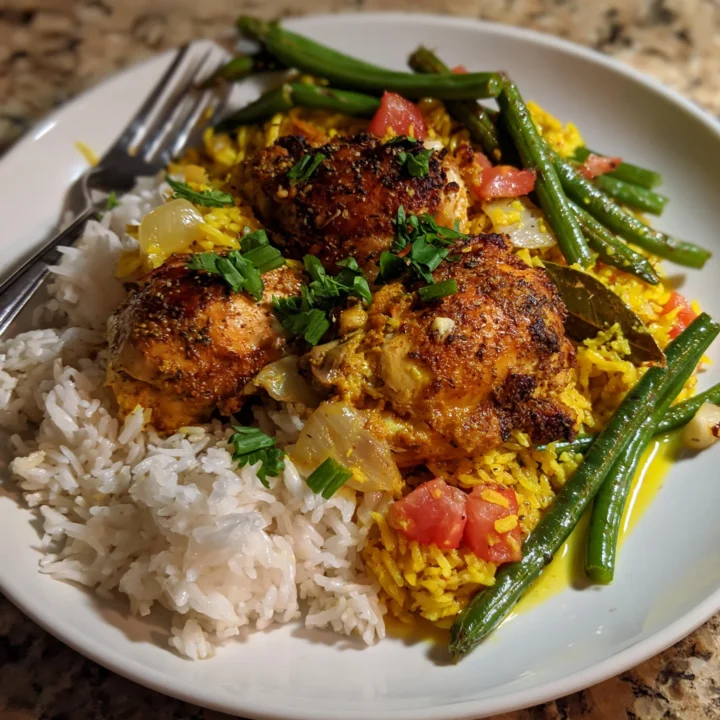
One Pot Turmeric Chicken and Rice
The best recipes are the ones that make you look like you spent hours in the kitchen when you really did not. This one pot turmeric chicken and rice does exactly that. It delivers bold, layered flavors, a stunning golden color, and a satisfying, complete meal, all from a single pot and a handful of pantry staples. Here is exactly why this recipe is going to earn a permanent spot in your weekly dinner rotation.
Ingredients
- 1 1/2 pounds skinless, boneless chicken breast, cut into 1 1/2-inch pieces
- Salt and freshly ground black pepper, to taste
- 1 tablespoon unsalted butter
- 1 teaspoon ground turmeric
- 1 cup chopped onion
- 2 teaspoons fresh ginger, peeled and minced
- 2 cloves garlic, minced
- 1 cup chopped tomato
- 2 cups green beans, cut into 2-inch pieces
- 1 teaspoon curry powder
- 1 pinch ground cinnamon
- 1/4 teaspoon ground cumin
- 1 cup jasmine rice
- 2 bay leaves
- 2 teaspoons fish sauce
- 1 1/2 cups chicken stock
Instructions
- Prepare the chicken: Pat chicken dry and season with salt and pepper.
- Brown the chicken: Melt butter in a large pot over medium-high heat. Add turmeric, then chicken. Brown both sides for 2–3 minutes. Remove and set aside.
- Cook aromatics: In the same pot, sauté onion, ginger, and garlic for about 2 minutes until fragrant.
- Add vegetables and spices: Stir in tomato, green beans, curry powder, cinnamon, cumin, and rice. Cook for 1 minute, stirring constantly.
- Combine and simmer: Return chicken to the pot. Add bay leaves, fish sauce, and chicken stock. Stir well, scraping up any browned bits.
- Cook the rice: Bring to a boil, cover, and reduce heat to low. Simmer for 10 minutes.
- Finish cooking: Slightly vent the lid and cook for another 10–15 minutes until rice is tender.
- Rest and serve: Remove from heat, let sit for 5 minutes, then fluff and serve warm.
Notes
- For deeper flavor: Do not skip browning the chicken or toasting the spices.
- For better texture: Let the dish rest before serving to allow the rice to firm up.
- For extra freshness: Add chopped herbs or a squeeze of lemon just before serving.
- For variation: Swap chicken breast with thighs for a juicier result.
- For meal prep: Store in airtight containers and reheat with a splash of liquid to maintain moisture.
Nutrition Information:
Yield: 4 Serving Size: 1Amount Per Serving: Calories: 420Total Fat: 14gSaturated Fat: 5gSodium: 620mgCarbohydrates: 38gFiber: 4gSugar: 4gProtein: 32g